


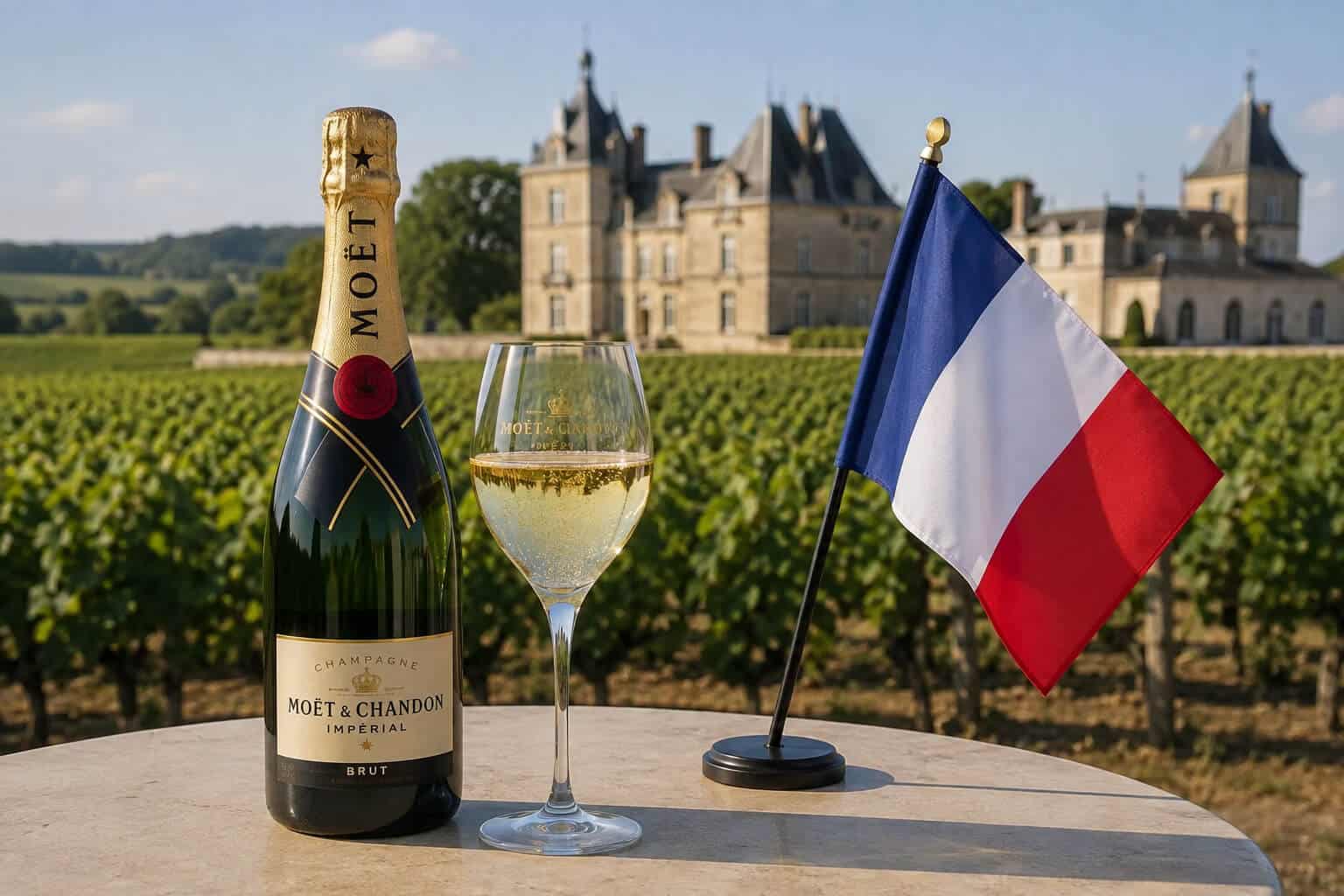
France’s 2026 wine calendar has apparently decided to stop taking suggestions.
Five heat waves, severe drought, and spring rains that practically disappeared have pushed vineyards across the country into harvest mode weeks earlier than normal. Champagne went even further, setting a record of its own: the region officially authorized the 2026 harvest to begin on August 12, the earliest start in its history.
But Champagne wasn’t the first French wine region to reach for the pruning shears.
France’s Earliest Harvest on Record
Southern France got the season moving back in July. In the Gard and Hérault departments of Languedoc, growers began picking grapes on July 16—the earliest harvest start ever recorded in France.
To put that into perspective, the previous record belonged to the famously hot and dry 2003 vintage. This year beat it by roughly two weeks.
That’s one of those records that sounds impressive until you remember why it happened.
The early harvest then moved north. Beaujolais began picking around August 10, Burgundy followed at about August 15, and Alsace was preparing to start on August 17. In Champagne, the official harvest date was August 12, although some producers had already started picking on August 6.
The reason is hardly mysterious. July 2026 was the hottest month ever recorded in France. Grapes, unfortunately for anyone trying to maintain a neat production schedule, don’t care much about the wine industry’s calendar. They ripen according to temperature, sunlight, water availability—and whatever else Mother Nature decides to throw at them.
This year, Mother Nature apparently hit fast-forward.
Champagne Is Protecting Quality—But Giving Up Volume
An early harvest isn’t automatically bad news for wine. In fact, harvesting earlier can sometimes help growers preserve one of the most important components of a balanced wine: natural acidity.
That’s especially important in Champagne.
For sparkling wine, acidity is not something winemakers are trying to avoid. It’s one of the region’s greatest assets. High natural acidity helps deliver freshness, tension and balance—the characteristics that make Champagne so lively in the glass and, conveniently, make that second glass feel like an excellent idea.
The problem is that an early harvest can also mean smaller yields.
Following an August revision, Champagne’s permitted yield was reduced to roughly 7,000 kilograms per hectare. If the heat continues, that figure could be revised again.
Other French wine regions are facing similar challenges.
In Bordeaux, growers are expecting a smaller crop because of water shortages, even though the overall condition of the vineyards is being described as very good. That’s an important distinction: fewer grapes don’t necessarily mean lower-quality wine.
In Cognac, in the Charente region, harvesting also began unusually early, in early August. There, intense sunlight created another problem—sunburned grapes.
So, yes, the vines got plenty of sunshine in 2026.
They got a little too much of it.
Heat, Drought and Wildfires Are Turning Harvest Into a Logistics Puzzle
For wineries, an unusually early vendange is much more than a change on the calendar. It can throw the entire production schedule into chaos.
Harvest workers typically arrive according to carefully planned dates. Picking equipment is booked in advance. Trucks, sorting lines, presses, fermentation tanks and cellar crews all have to be ready at the right moment.
But when grapes ripen several weeks earlier than expected, that carefully organized schedule can unravel very quickly.
The biggest headache is predicting the exact harvest date.
One day, a vineyard may look as though it has another week to go. Then temperatures spike, sugar levels climb, acidity begins to fall, and suddenly the grapes need to come off the vines immediately.
Then, just to keep everyone humble, the weather changes again.
Rain can alter the situation overnight.
For larger estates and cooperatives, this becomes a serious logistical challenge. Producers need enough workers, functioning equipment, transportation and cellar capacity—all at exactly the same time.
And grapes don’t wait politely while everyone gets organized.
Add extreme heat, drought and wildfire risk to the equation, and the traditional French harvest routine starts looking less like a calendar and more like a high-speed juggling act.
This Isn’t Just a Strange Year. It’s Becoming the New Normal
The most important story behind the 2026 harvest isn’t actually the record.
It’s the trend.
French agricultural research indicates that over the past 50 years, grape harvest dates across French wine regions have moved earlier by roughly 24 days on average. That works out to approximately four days earlier every decade.
And the shift isn’t random. It closely tracks rising average temperatures.
There’s even a wonderfully symbolic example of how quickly the traditional wine calendar is becoming outdated.
In Saint-Émilion, the traditional festivities marking the beginning of the harvest are taking place this year several weeks after growers have already started harvesting grapes.
Think about that for a moment.
The celebration says, “The harvest is beginning!”
The vineyards say, “We’ve been doing this for weeks.”
It’s funny—but it also illustrates a very real problem for the French wine industry.
Climate change is forcing producers to rethink much more than harvest dates. Vineyard management practices are changing. Growers are paying closer attention to water availability. Picking decisions are becoming increasingly precise. And producers are reconsidering which grape varieties are best suited to particular regions as growing conditions evolve.
The map of French wine may look familiar.
The climate behind it increasingly does not.
So What Will Actually Be in the Bottle?
At this point, the most interesting question isn’t necessarily whether the 2026 vintage will be good.
It’s how much wine there will be.
Harvesting before the worst of the summer heat can help preserve acidity and freshness, which is particularly important for regions such as Champagne. So calling the 2026 vintage a failure would be premature.
A smaller overall crop, however, looks like a much more realistic possibility.
Extreme heat also creates a familiar balancing act in the vineyard. Grapes can accumulate sugar more quickly, while acidity may decline. That can lead to wines with higher potential alcohol, softer acidity and a riper, more generous fruit profile.
For some styles of wine, that can work beautifully.
For others, it can create a winemaking headache.
And that brings us to the real paradox of the 2026 vintage.
The earlier growers harvest in order to escape extreme heat, the more they have to adapt to a climate that is changing the definition of a “normal” growing season in the first place.
So 2026 may eventually be remembered as more than France’s earliest harvest on record.
It may be remembered as another unmistakable sign that the traditional French wine calendar is losing its authority.
For generations, growers planned around the calendar.
Increasingly, they plan around the weather.
And these days, the weather gets the final vote.