


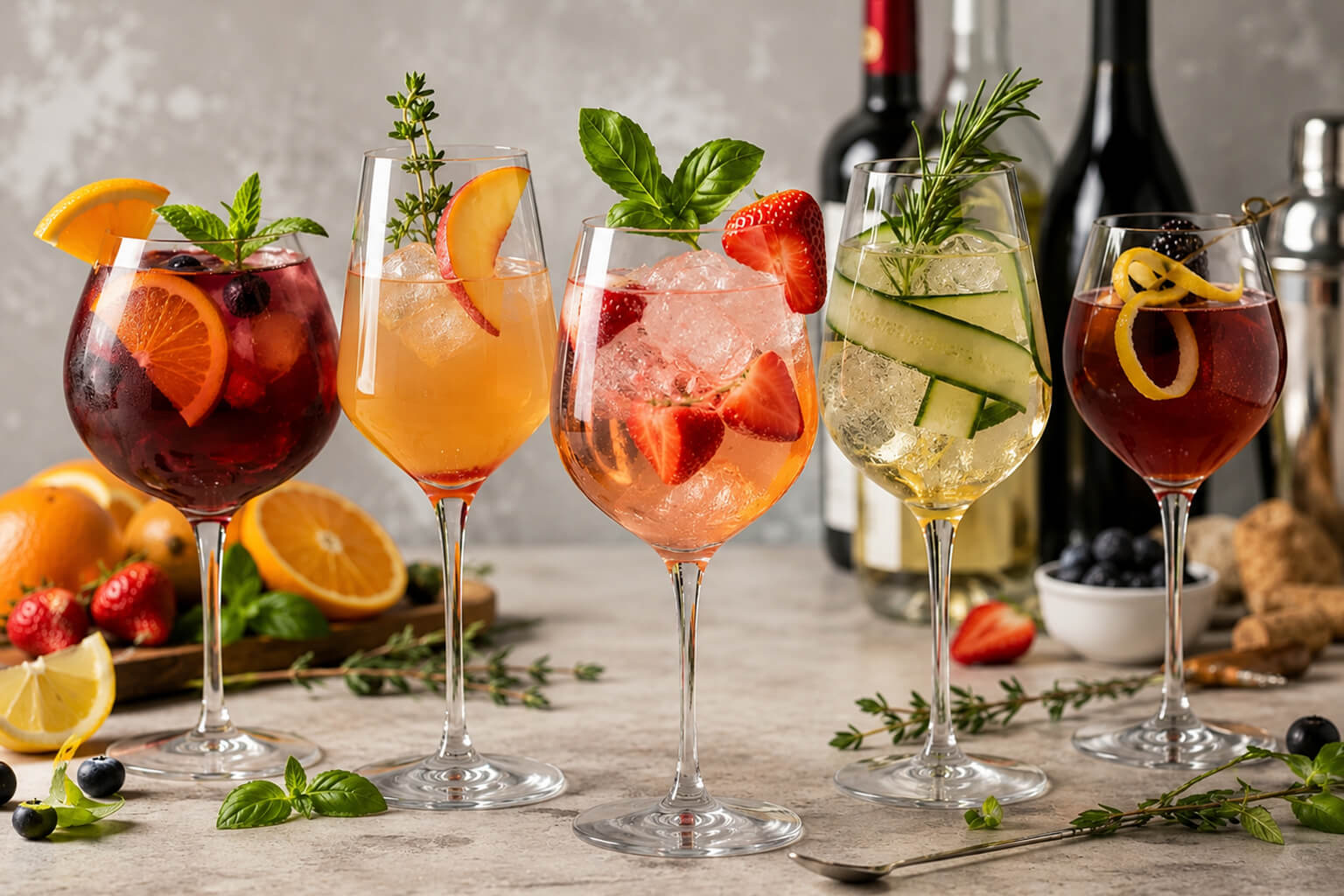
Wine doesn’t always have to be enjoyed straight from the bottle. Add the right fruit, a little fizz, or a splash of soda, and that bottle can turn into a surprisingly good cocktail.
There’s a good chance you already have everything you need to make one at home.
No fancy bar equipment. No obscure liqueurs that require an online order. And definitely no need to sacrifice a $100 bottle of Cabernet to the cocktail gods.
The secret is simple: start with a wine that has enough character to hold its own, then add ingredients that complement it instead of burying it under sugar.
For most wine cocktails, an affordable bottle of dry wine is all you need. A crisp Sauvignon Blanc, Pinot Grigio, fruity Merlot, dry rosé, or bottle of Prosecco will usually work much better than an expensive, heavily oaked wine.
Ready to mix? Here are five easy recipes — one for white wine, one for red, one for rosé, one for sparkling wine, and one featuring Georgian amber wine.
White Wine Citrus Spritz
This is the cocktail to make when you want something refreshing, light, and not overly sweet. It’s especially good on a hot afternoon when a full-strength cocktail feels like a little too much.
What You’ll Need
- 4 oz Sauvignon Blanc or Pinot Grigio
- 2 oz grapefruit juice
- 1 oz club soda
- 2–3 thin cucumber slices
- 1 small lime wedge
- Ice
- Fresh mint, optional
How to Make It
Fill a large wine glass with ice.
Add the Sauvignon Blanc, grapefruit juice, and cucumber slices. Give everything a gentle stir, then top with club soda.
Squeeze the lime wedge over the drink and drop it into the glass. Add a small sprig of mint if you like.
Why It Works: Sauvignon Blanc brings bright acidity and fresh citrus notes, while grapefruit adds a pleasant bitter edge. The club soda keeps the whole thing light and refreshing.
Wine Tip: Look for an affordable Sauvignon Blanc from California, New Zealand, or Chile. There’s no reason to use an expensive bottle here.
Cherry Red Wine Cooler
Red wine cocktails sometimes get a bad rap, especially when they’re loaded with cola, sugar, or heavy spirits. This version takes a different approach: fruity red wine, tart cherry, citrus, and a little fizz.
What You’ll Need
- 4 oz Merlot
- 2 oz tart cherry juice
- ½ oz fresh lemon juice
- 1 oz club soda
- 2 dashes orange bitters, optional
- Ice
- Orange peel or an orange slice
How to Make It
Fill a rocks glass or small tumbler with ice.
Pour in the Merlot, cherry juice, and fresh lemon juice. Stir gently.
Add the club soda and, if you’re using it, two dashes of orange bitters.
Garnish with an orange slice or a strip of orange peel.
Why It Works: Merlot is soft and fruit-forward enough to pair with cherry without becoming overly tannic. Lemon keeps the drink from getting too sweet, while orange adds a warm citrus note.
Wine Tip: Choose a young, fruit-driven Merlot. Skip heavily oaked or very tannic Cabernet Sauvignon for this recipe. Oak and tannins can become surprisingly harsh when mixed with fruit juice.
Rosé Berry Smash
Rosé is practically begging to become a summer cocktail. It already has the fruitiness and acidity you need, so there’s no reason to overcomplicate things.
What You’ll Need
- 4 oz dry rosé
- 1 oz lemonade
- ½ oz fresh lime juice
- 3 strawberries
- 4–5 raspberries
- 1 oz club soda
- Ice
- Fresh mint
How to Make It
Place the strawberries and raspberries in a large wine glass or tumbler.
Gently press them with a muddler or the back of a spoon. You don’t need to turn them into jam — just release some of their juice and aroma.
Add ice, then pour in the rosé, lemonade, and lime juice.
Top with club soda and stir gently.
Add a few mint leaves and one fresh berry for garnish.
Why It Works: The dry rosé provides the wine character, the berries add natural fruitiness, and lime brings enough acidity to keep the drink bright and lively.
Wine Tip: Use a dry, crisp rosé rather than a very sweet one. If the wine is already sweet, the lemonade can push the cocktail straight into dessert territory.
Peach Prosecco Bellini
Some wine cocktails have complicated histories and even more complicated recipes. The Bellini isn’t one of them — and that’s part of its charm.
What You’ll Need
- 4 oz chilled Prosecco
- 1½ oz peach purée
- ¼ oz fresh lemon juice
- 1 teaspoon simple syrup, optional
- Thin peach slice for garnish
How to Make It
Add the peach purée and lemon juice to a chilled champagne flute.
If your peaches aren’t very sweet, add a teaspoon of simple syrup.
Slowly pour in the chilled Prosecco. Give the drink one gentle stir — and stop there. You want to keep those bubbles.
Garnish with a thin peach slice.
Why It Works: Sweet, ripe peach and crisp sparkling wine are a classic combination. A small splash of lemon juice keeps the cocktail fresh rather than syrupy.
Wine Tip: Prosecco is an easy choice because it’s widely available and usually affordable. Look for a dry or extra-dry bottle rather than a very sweet sparkling wine.
Georgian Qvevri Spritz
Georgian wine has a personality all its own. Amber wines made in traditional clay qvevri can be earthy, textured, and gently tannic — a natural match for citrus and fresh herbs. This cocktail leans into those qualities instead of trying to hide them.
What You’ll Need
- 4 oz Georgian amber wine (Rkatsiteli or a qvevri-style blend)
- 1½ oz fresh tangerine or orange juice
- ½ oz honey syrup (1:1 honey and warm water, cooled)
- 1 oz tonic water
- A few fresh tarragon leaves
- Ice
How to Make It
Fill a wine glass with ice.
Add the amber wine, tangerine juice, and honey syrup. Stir gently.
Top with tonic water and add a few tarragon leaves. Gently press the leaves once to release their aroma before dropping them into the glass.
Why It Works: Amber wine’s tannic structure and dried-apricot notes stand up well to honey and citrus rather than disappearing behind them. Tarragon is widely used in Georgian cuisine and adds a subtle anise-like note that ties the drink together. The bitterness of the tonic keeps the cocktail from tipping into dessert territory.
Wine Tip: Look for a Georgian qvevri or amber wine made from Rkatsiteli or Kisi grapes. Depending on where you live, you may find these wines at specialty wine shops, Georgian wine retailers, or online stores that legally ship wine to your state. If you can’t find Georgian amber wine, a skin-contact orange wine from another region is a reasonable substitute.
A Few Rules for Better Wine Cocktails
The best wine cocktails are usually the simplest ones.
First, don’t use an expensive bottle. Ice, juice, soda, and fruit will change the wine’s character anyway. But don’t reach for a bottle that already tastes unpleasant. A cocktail can hide some imperfections, but it can’t perform miracles.
Second, pay attention to sweetness. If your wine is sweet, use less juice or syrup. If you’re working with a dry wine, a little fruit or simple syrup can round things out.
Third, don’t shake carbonated drinks. Prosecco and club soda should be added at the end and stirred gently.
And finally, measure your ingredients. Wine cocktails can taste deceptively light, especially when they contain ice, fruit juice, and carbonation. A measured pour gives you a better-balanced drink — and keeps the cocktail from becoming stronger than you intended.
What Wine Should You Keep at Home?
You don’t need a special “cocktail wine” collection.
- For white wine cocktails, keep a bottle of Sauvignon Blanc or Pinot Grigio around.
- For red wine, Merlot or a fruity Pinot Noir is a better choice than a powerful Cabernet Sauvignon.
- For rosé cocktails, choose a dry, fruit-forward rosé.
- For sparkling cocktails, a bottle of Prosecco is one of the easiest options to find in American stores.
And if you want something a little different, keep a bottle of Georgian amber wine on hand for guests who enjoy trying new things.
These wines are widely available, relatively affordable, and versatile enough to work both in a cocktail and on their own. Georgian amber wine may take a little more effort to find, but that’s part of the fun — especially if you want to introduce your guests to a wine style they may not have tried before.
Conclusion
A good wine cocktail isn’t about turning wine into something it isn’t. It’s about giving the wine a little help from ingredients that make its natural character more interesting.
A splash of grapefruit can brighten Sauvignon Blanc. Cherry can bring out the fruit in Merlot. Fresh berries make rosé even more refreshing. Peach and Prosecco? That’s a combination that has been making people happy for a very long time. And the combination of tangerine and tarragon shows just how versatile a good Georgian amber wine can be.
So next time you have half a bottle of wine left in the refrigerator, don’t automatically write it off. Grab some fruit, ice, and sparkling water — and give that wine a second act.
Just remember the golden rule: one good wine, one clear flavor direction, and no need to turn your cocktail into a chemistry experiment.