


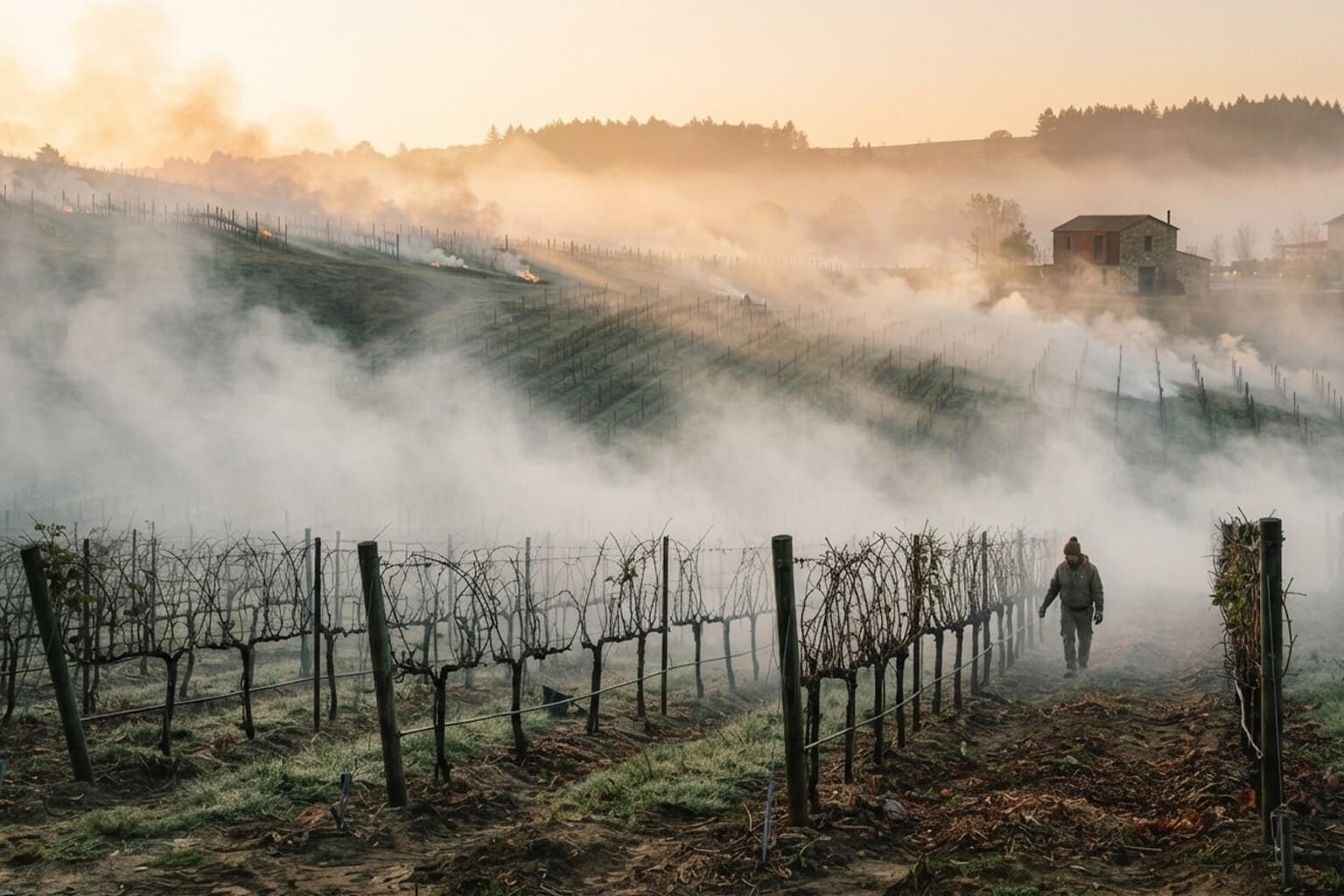
Europe’s Wildfires and Wine: What Will Happen to the Wine Market? The summer of 2026 will likely be remembered across Europe not only for record-breaking heat but also for devastating wildfires. France and Spain have been hit especially hard, with fires destroying tens of thousands of acres of forest while thick smoke has blanketed some of the continent’s most famous wine regions.
Naturally, wine lovers are asking an important question:
Have the vineyards been damaged, and could European wines become more expensive?
Have the Fires Reached Wine Country
Unfortunately, the answer is yes.
One of the most critical situations has unfolded in Gironde, the French department that’s home to the world-famous Bordeaux wine region. Large wildfires have approached vineyards, forcing some wineries to evacuate.
While most of Bordeaux’s prestigious appellations have escaped direct fire damage, some vineyards in Pessac-Léognan, Provence, and Roussillon have already suffered significant losses.
Spain is facing similar challenges.
Wildfires have spread across several wine-producing regions, while extreme heat and prolonged drought continue to put additional stress on the vines. Even vineyards untouched by flames may produce smaller harvests this year because of unusually high temperatures and limited rainfall.
Why Smoke Can Be More Dangerous Than Fire?
Surprisingly, flames aren’t always the biggest threat to wine.
Even if a vineyard survives without burning, heavy smoke can alter the grapes’ chemical composition through a phenomenon known as smoke taint.
As grapes ripen, their skins can absorb smoke-derived phenolic compounds. During winemaking, these compounds may create undesirable flavors and aromas reminiscent of burnt wood, ash, or campfire smoke.
Because of this risk, wineries across affected regions are carefully testing their grapes. In some cases, producers may decide not to release certain 2026 vintage wines if quality doesn’t meet their standards.
What’s Happening in Other Wine Regions Around the World?
Many wine professionals are already calling 2026 one of the most unusual vintages in recent history.
Extreme heat, prolonged droughts, heavy rainfall, and flooding have forced growers around the world to rethink their traditional vineyard calendars. In many regions, grapes are ripening much earlier than normal, leading to historically early harvests.
One of the first wineries to begin harvest this year was Cantine Ermes in Sicily’s Trapani Province, where picking started on July 21—the earliest harvest in the winery’s history.
France is seeing a similar trend.
In Roussillon, growers at Domaine Lafage began harvesting Muscat Petits Grains on July 23, driven by relentless heat that has persisted since late spring.
California isn’t far behind.
In both Napa Valley and Sonoma, grapes destined for sparkling wine production are being harvested three to five weeks earlier than in a typical year.
Meanwhile, harvest has already wrapped up across much of the Southern Hemisphere.
South Africa experienced what local winemakers unofficially dubbed a “pendulum season,” marked by dramatic swings between heavy rainfall and intense heat. Despite challenging weather, yields remained surprisingly strong. The berries were smaller than usual, resulting in concentrated flavors. White wines retained vibrant acidity and freshness, while red varieties achieved excellent phenolic ripeness.
New Zealand also reported high-quality fruit. However, growers there are facing a different challenge altogether—a noticeable slowdown in global demand and declining export sales.
Australia’s story has been far less encouraging.
The country’s 2026 grape harvest totaled approximately 1.27 million metric tons, making it the smallest crop in 26 years. Production fell nearly 19% compared to last year and roughly 25% below the average of the past decade. Severe flooding caused additional vineyard damage, particularly affecting red grape varieties.
South America, on the other hand, has reason for optimism.
Cooler growing conditions in both Chile and Argentina allowed grapes to ripen slowly and evenly. Winemakers expect wines with concentrated aromas, excellent structure, and strong aging potential.
Taken together, these developments suggest that the 2026 vintage could become one of the most distinctive in decades.
Climate change continues to reshape global winemaking, and harvest calendars that once seemed predictable are becoming increasingly difficult to rely on.
Will Wine Prices Go Up?
For now, consumers probably shouldn’t expect dramatic price increases.
The reason is simple.
Most wines currently sitting on store shelves were made from grapes harvested in previous years.
However, if the 2026 harvest ultimately proves significantly smaller than expected, the market is likely to feel the effects during 2027 and 2028.
Wines most likely to become more expensive include:
- Mid-range and premium Bordeaux wines
- Selected wines from Southern France
- Certain Spanish wines produced in the hardest-hit regions
Most industry experts do not expect a widespread shortage of European wine, but availability of certain labels and limited-production wines could become noticeably tighter.
Should You Stock Up on Your Favorite Wines?
There’s no reason to panic.
The global wine market remains remarkably resilient, and France, Spain, and Italy still have substantial inventories from previous vintages.
That said, collectors and enthusiasts who follow specific wineries or seek out limited-production vintages may want to keep a close eye on developments.
If the 2026 vintage turns out to be significantly smaller or lower in quality, the best wines from certain producers could become noticeably more expensive over the next couple of years.
The Bottom Line
Wildfires are no longer isolated natural disasters—they’re becoming part of the new reality of European winemaking.
Not long ago, vintners worried most about rain arriving just before harvest.
Today, many are watching wildfire maps just as closely as weather forecasts.
As climate conditions continue to evolve, the future of wine may depend as much on adapting to nature as it does on centuries of winemaking tradition.