


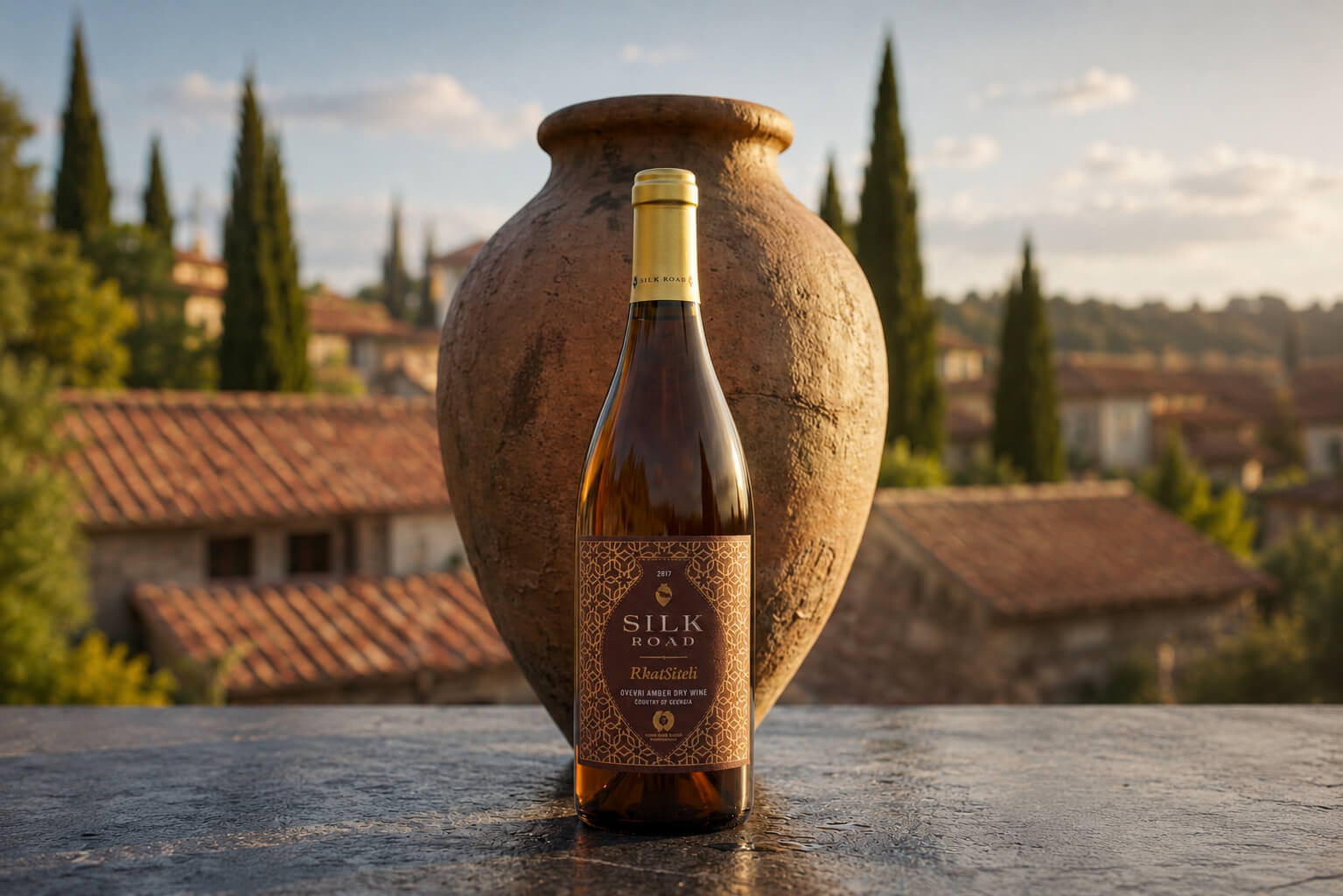
Great white wine can be made in many different ways, but two traditions offer a particularly interesting contrast: the classic European approach and the ancient Kakhetian method of Georgia.
At first glance, winemaking might seem pretty similar everywhere. Grapes are harvested, fermented, aged, bottled—and eventually poured into a glass. But that’s a little like saying barbecue is the same everywhere in the United States. Ask someone in Texas and someone in the Carolinas, and you may get two very different answers.
The same is true with wine.
The European approach is built around precision and control at virtually every stage. The Kakhetian tradition takes a very different path, allowing grapes, native yeasts, clay and time to play a much bigger role.
And when that method is used with Rkatsiteli, one of Georgia’s best-known native grape varieties, the result can be a white wine that looks, tastes and feels surprisingly different from the crisp, fruit-driven whites many American wine drinkers know.
Let’s take a closer look.
Two Winemaking Philosophies: Control vs. Trusting the Process
Modern winemaking offers countless variations, but they can broadly be grouped into two very different philosophies.
The classic European method
For most conventional white wines, the process looks something like this:
- Grapes are harvested and carefully sorted.
- The grapes are crushed and pressed, with the juice separated from the skins and seeds relatively quickly.
- Fermentation takes place under controlled conditions, often in stainless steel tanks at approximately 57–64°F (14–18°C), using selected commercial yeast strains.
- The wine is then aged in stainless steel or oak, depending on the desired style, for anywhere from several months to several years.
- Finally, the wine may be stabilized and filtered before bottling.
This is winemaking as precision engineering. The winemaker can control fermentation temperature, select specific yeast strains, decide how long the wine spends in contact with oak, and carefully shape the final style. The Kakhetian method takes almost the opposite approach.
The Kakhetian method: Qvevri winemaking
Instead of separating the juice from the solid parts of the grape immediately, the entire grape mass is used:
- Grapes are crushed together with the skins, seeds and stems. Yes, even white grapes.
- The resulting grape must and solids are placed into a qvevri, a large clay vessel traditionally buried in the ground up to its neck inside a Georgian wine cellar known as a marani.
- Fermentation traditionally relies on native yeasts rather than selected commercial cultures.
- Because the vessels are buried underground, temperatures remain relatively stable throughout the year.
- The wine remains in contact with the grape skins and other solids for several months—often around three to six months, and sometimes longer.
- After the wine is separated from the solids, the qvevri can be sealed and the wine allowed to continue aging.
The fundamental difference is simple but enormously important:
The grape juice stays in contact with the skins, seeds and stems for an extended period of time.
That is highly unusual by modern European white-wine standards. And this isn’t simply an old-fashioned technique that survived by accident. In 2013, UNESCO added the traditional Georgian method of making wine in qvevri to its Representative List of the Intangible Cultural Heritage of Humanity. Not bad for a technology that predates stainless steel tanks by quite a few centuries.
Who Still Makes Qvevri Wine Today?
Qvevri are most strongly associated with Georgia, and for good reason. The country’s winemaking tradition has developed one of the world’s most distinctive systems for fermenting and aging wine in clay vessels. But Georgia isn’t the only place where winemakers have become interested in ancient clay-based techniques. Similar approaches can be found in several other wine-producing countries:
- Armenia uses traditional clay vessels known as karas, which are similar in concept to qvevri.
- Italy, particularly Friuli, has become famous for skin-contact white wines, often referred to as orange wines. Some producers have been influenced by Georgian winemaking traditions.
- Slovenia, especially the Brda area, has seen a revival of amphora and clay-vessel winemaking over the past couple of decades.
- The United States, particularly California and Oregon, has a small number of wineries experimenting with clay vessels and techniques inspired by ancient winemaking traditions.
Even with this growing interest, authentic qvevri winemaking remains a tiny niche in the global wine industry. The International Organisation of Vine and Wine (OIV) estimates global wine production at roughly 26 billion liters annually. Authentic qvevri wines account for only a tiny fraction of that volume—estimated at well below 0.05%. In other words, compared with conventional commercial wine production, qvevri wine remains a very small drop in a very large ocean. And that scarcity is part of what makes it so interesting.
What Does Qvevri Winemaking Actually Do to the Wine?
This is where things get really interesting. The appeal of qvevri wine isn’t simply the romantic story of ancient clay vessels. The technique can fundamentally change the character of the finished wine.
Flavor
Extended skin contact extracts tannins and other phenolic compounds from the grape solids. That’s unusual for white wine. Most white wines are designed to be bright, refreshing and fruit-forward, with little or no noticeable tannic grip. A qvevri-aged white can have a completely different personality: more structure, more texture and a noticeable tannic sensation that may remind you of a light red wine.
Aroma
Native fermentation and prolonged skin contact can create a more complex and distinctive aromatic profile. Instead of focusing primarily on fresh citrus and tropical fruit, qvevri wines may show notes of dried fruit, nuts, honey, herbs, tea and warm spices. It’s a very different experience from a fresh, stainless-steel Chardonnay.
Texture
The clay vessel also plays an important role. Qvevri are porous, allowing a limited exchange of oxygen during aging. This gradual micro-oxygenation can contribute to the wine’s texture and development without introducing the oak flavors associated with barrel aging. The result can be a wine that feels broader, more layered and more substantial on the palate. Perhaps the most fascinating part is how little direct intervention is traditionally involved. There is no stainless-steel tank with a computer constantly adjusting the temperature. There are no commercial yeast cultures designed to push the fermentation in a particular direction. Filtration may also be minimal. Instead, the winemaker creates the conditions and then lets the grapes, native microorganisms, clay, temperature and time do much of the work.
You could say the winemaker’s most important skill is sometimes knowing when not to interfere.
Qvevri Rkatsiteli: A White Wine That Plays by Different Rules
One of the best examples of this style is Rkatsiteli. Rkatsiteli is a dry white wine made from one of Georgia’s indigenous grape varieties, and it is absolutely worth exploring if you want to understand what qvevri winemaking can do. Made using a conventional European-style process, Rkatsiteli can produce relatively pale, fresh and aromatic wines. Put the same grape into a qvevri, however, and the personality changes dramatically. Extended contact with grape skins, seeds and stems can transform almost every major characteristic of the wine.
Color: Instead of a pale lemon or straw hue, qvevri Rkatsiteli can develop a much deeper golden or amber color.
Aromatics: Fresh fruit takes a step back, making room for aromas and flavors of dried apple, apricot, quince, herbs, nuts and spices.
Structure: The wine becomes fuller and drier, with noticeable tannic grip and a more substantial palate.
But perhaps the biggest difference is texture. Qvevri Rkatsiteli doesn’t necessarily behave like the light, easy-drinking white wine many people expect from the category. Thanks to the phenolic compounds extracted during extended skin contact, it can have a distinctive tactile quality and structure. And this isn’t simply a matter of one taster preferring one style over another.
Comparative scientific research has found significant differences in the phenolic composition of Rkatsiteli made using conventional European-style techniques versus qvevri fermentation. That leads to an important conclusion:
The winemaking method can reveal an entirely different side of the same grape.
Take one Rkatsiteli grape variety and change the production method, and you can end up with two wines that seem almost unrelated. One emphasizes freshness, fruit and aromatic purity. The other emphasizes structure, phenolics, texture and complexity. Same grape. Very different conversation in the glass.
What Does Science Say About Qvevri Rkatsiteli?
Modern research is beginning to explain some of the chemistry behind this ancient winemaking tradition.
One of the most important characteristics of extended skin contact is the extraction of phenolic compounds from the grape skins, seeds and stems. Combined with the oxygen exchange associated with porous clay vessels, this creates a very different chemical environment from that of a conventional stainless-steel fermentation.
Studies of qvevri wines have found differences in their concentrations and profiles of phenolic compounds and antioxidant-related substances compared with conventionally produced wines.
The porous nature of clay also allows gradual oxygen exchange, which can influence the evolution and polymerization of various organic compounds during fermentation and aging. But there’s an important distinction worth making.
Ancient winemaking techniques are fascinating precisely because they work differently—not because science has proven that every qvevri wine is automatically healthier, more natural or superior to conventionally made wine. Wine is still wine. Its final quality depends on the grapes, vineyard, winemaking decisions, sanitation, fermentation and countless other variables.
What qvevri demonstrates particularly well is something more fundamental:
You can dramatically change a wine’s chemical composition, texture and sensory profile simply by changing how the grape is processed.
That is a pretty remarkable lesson from a clay vessel buried in the ground.
The Bottom Line
And here’s the bigger idea.
The grape determines a wine’s potential, but winemaking determines which part of that potential ends up in your glass.
The modern European approach puts the emphasis on control, consistency and precision. The Kakhetian tradition puts more trust in the interaction between grapes, native microorganisms, clay, temperature and time. It’s almost a philosophical argument between humans and nature.
The European approach says: “Let’s control every variable we can.” The Kakhetian approach answers: “Let’s create the right conditions—and then get out of the way.” Neither philosophy is automatically better. They simply produce different kinds of wine. And that may be the real reason qvevri wines are so fascinating today.
They aren’t just an alternative way to make white wine. They represent a completely different idea about what the winemaker’s role should be. For anyone used to crisp Sauvignon Blanc, stainless-steel Chardonnay or other bright, fruit-driven white wines, a qvevri Rkatsiteli can be something of a wake-up call.
It shows that white wine doesn’t have to be light, simple or purely refreshing. Sometimes white wine can have tannin, grip, depth and a texture that demands a little attention. And sometimes the oldest winemaking technology in the world can still teach modern wine lovers something new.