


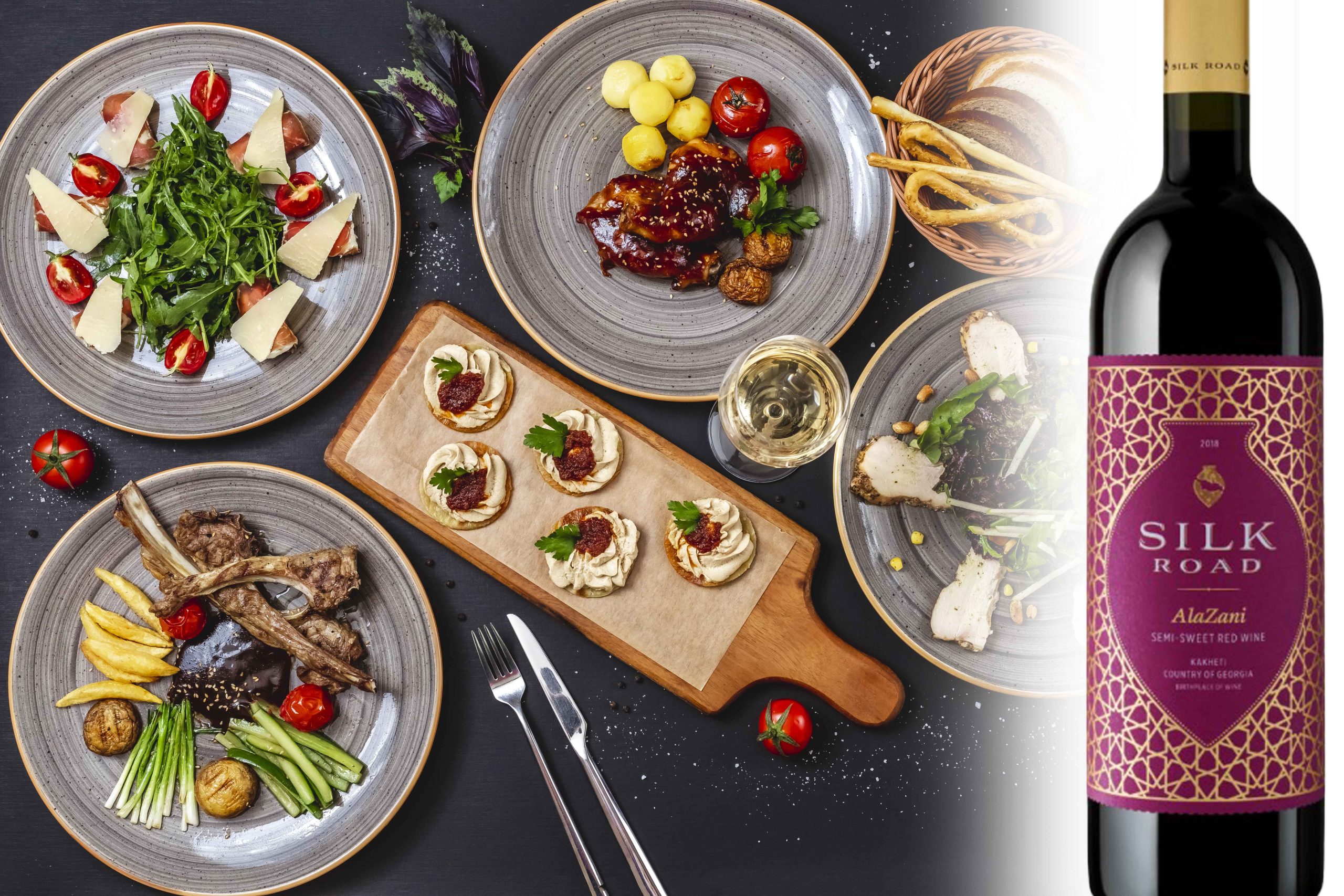
Alazani may be one of the most versatile sweet red wines out there. The same bottle can work with foods that have completely different flavor profiles—from spicy tacos and smoky barbecue ribs to chocolate-based desserts.
For a semi-sweet red wine, that kind of range is unusual. And it is exactly what makes Alazani worth a closer look.
The Alazani Terroir: Where the Wine Begins
The Alazani Valley is located in Kakheti, Georgia’s most important wine region and home to some of the country’s best-known vineyards.
The geography here works almost like a natural climate-control system. The Greater Caucasus Mountains lie to one side of the valley, while the Tsiv-Gombori Range rises on the other. Together, they influence air movement, temperature, and rainfall, creating a distinctive local climate.
- Continental climate: Hot summers can reach about 95°F (35°C), while winters are moderately cold. The contrast between day and night helps grapes accumulate sugar while retaining acidity.
- Alluvial soils: The soils around the Alazani River are rich in clay and limestone, contributing body and a mineral backbone to the wine.
- Elevation: Vineyards sit roughly 1,300–2,600 feet (400–800 meters) above sea level. Cooler nights slow down ripening and help preserve the grapes’ aromas.
- More than 280 sunny days a year: That is comparable to Napa in terms of sunshine, although the summers here are generally more humid because of the surrounding mountains.
It is this combination that makes the region particularly well suited to naturally ripe, flavorful grapes. Saperavi can develop plenty of sugar while maintaining the acidity needed to keep a semi-sweet wine fresh rather than heavy.
The Perfect Grape for a Versatile Sweet Red Wine
The star red grape of Kakheti is Saperavi. Its name comes from a Georgian word associated with “dye” or “coloring,” and there is a good reason for that. Saperavi is one of the relatively rare teinturier varieties whose flesh is also deeply colored, not just the skin. The result is a remarkably dark ruby wine that can look almost inky in the glass.
So why Saperavi instead of international varieties such as Merlot or Cabernet Sauvignon?
- Naturally high acidity helps balance residual sugar and keeps the wine from tasting overly sweet.
- Thick skins provide tannins and structure, giving the wine enough backbone to support noticeable residual sugar.
- Cold tolerance—Saperavi can withstand temperatures down to roughly -13°F (-25°C), making it a dependable variety for local growers.
- A naturally intense flavor profile of dark berries, plum, prune, and spice works particularly well in a semi-sweet style.
Semi-sweet wines in Kakheti are often made by stopping fermentation before all of the grape sugar has been converted into alcohol. Cooling the wine slows or stops the yeast activity, leaving some natural grape sugar behind.
This approach is different from simply sweetening a finished wine with grape concentrate or syrup. Increasingly, Georgian producers favor controlled fermentation and natural residual sugar because it allows the wine to retain freshness rather than taking on a heavy, syrupy character.
Why Alazani Works So Well With American Food
This is where Alazani really gets interesting.
American food is not one cuisine—it is a mash-up of regional traditions and influences. You have Southern barbecue, Tex-Mex heat, Asian-inspired dishes, fusion cooking, and a serious national love affair with dessert.
A semi-sweet red wine with good acidity can handle that variety surprisingly well.
Here are some especially good matches:
- Barbecue and smoked meats: A touch of sweetness softens smoky flavors and works beautifully with spicy barbecue sauce.
- Spicy Tex-Mex dishes: Residual sugar can help cool the heat of chile peppers more effectively than a heavily tannic dry red.
- Asian dishes with soy or teriyaki sauce: The wine’s fruit and acidity can work comfortably alongside savory umami flavors.
- Soft cheeses and chocolate desserts: The wine can act as a bridge between savory food and dessert, especially when dark fruit and chocolate are involved.
- Turkey with cranberry sauce: A Thanksgiving classic. The wine’s sweet-tart character echoes the cranberry component of the meal almost perfectly.
That last pairing may be one of the most interesting. A Georgian semi-sweet red can make a lot of sense on an American holiday table, where turkey, cranberry sauce, savory stuffing, and sweet sides are all sharing the same plate.
What Does Alazani Taste Like Compared With Familiar U.S. Wines?
For an American wine drinker seeing “Alazani” on a bottle for the first time, a few familiar comparisons can make the style easier to understand.
| Familiar Category | What It Has in Common | How Alazani Is Different |
| Lambrusco | Fruitiness and a touch of sweetness | Alazani is a still red with more tannic structure |
| White Zinfandel | Approachable fruit and sweetness | Alazani is a true red wine with much darker fruit and more structure |
| Concord-based wines | Deep color and pronounced berry character | Saperavi tends to finish drier and has a less overtly “grapey” character |
| Port-style dessert wines | Deep color, ripe fruit, and sweetness | Alazani is typically much lower in alcohol, around 10–12% rather than 18–20% |
These comparisons also highlight an interesting gap on the American wine shelf.
For years, U.S. consumers have often encountered two very different worlds: dry, premium reds on one side and inexpensive sweet wines on the other. Alazani occupies a somewhat different space—a sweet-leaning red that still has acidity, tannins, structure, and a distinct sense of place.
The Bottom Line
In the $10–$15 price range, Alazani stands out for its versatility.
And the word sweet should not automatically make you think of dessert wine. The natural sweetness from Saperavi is balanced by acidity and moderate tannins, giving the wine a cleaner, more structured finish.
This is a wine with some backbone—not grape syrup in a fancy bottle.
It can handle spicy food, smoky barbecue, savory dishes, and, yes, even chocolate desserts. That kind of flexibility is relatively uncommon in this price category, where many wines are designed with a much narrower range of food pairings in mind.
If Georgian semi-sweet reds are still unfamiliar territory, Alazani is a style worth exploring alongside more familiar names such as Zinfandel or Lambrusco.
Sometimes the most interesting bottle on the table is the one that does not fit neatly into the usual categories.