


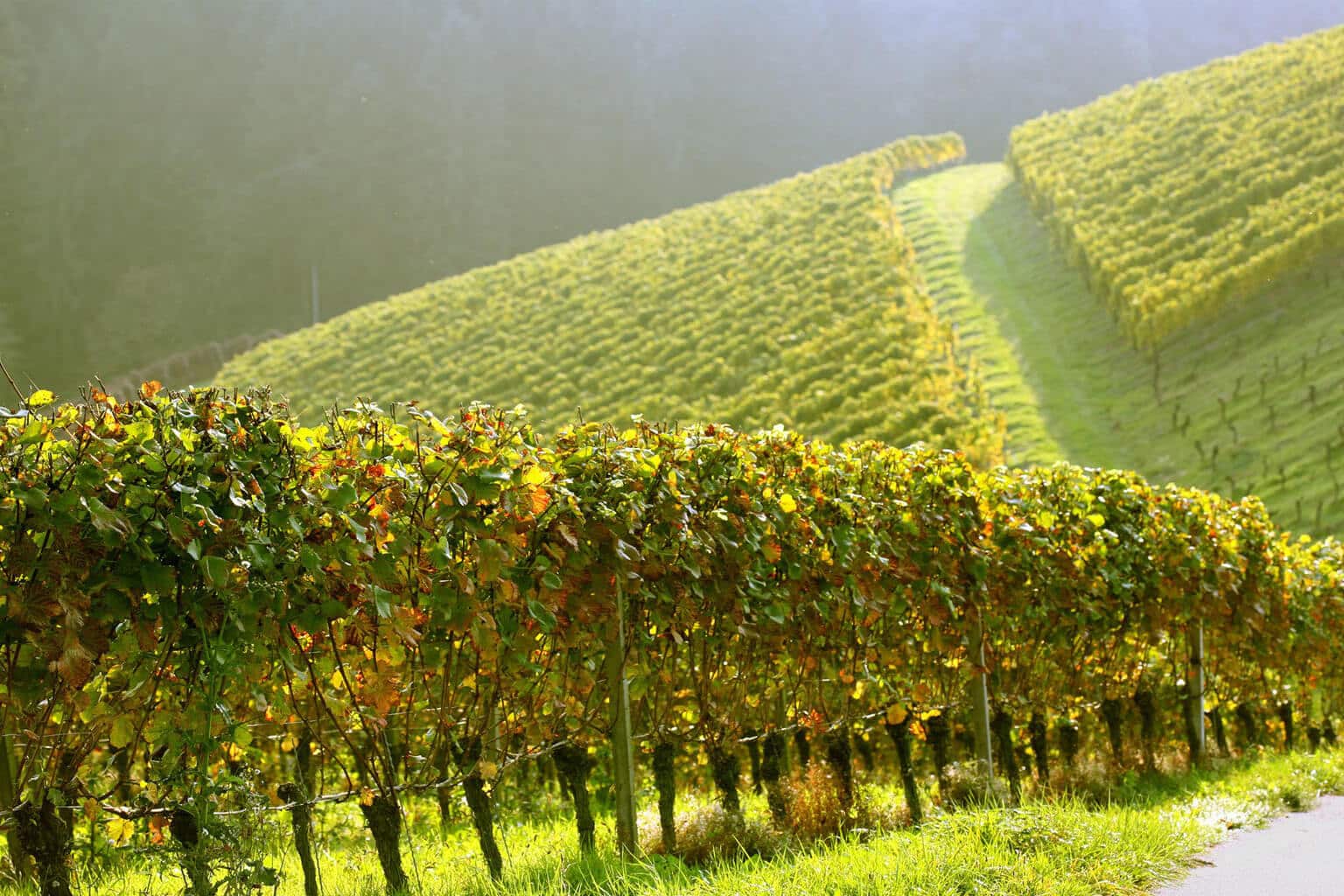
Look at vineyards from above, and the first thing that catches your eye is the almost perfect geometry. Row after row of vines stretches for hundreds of yards, as if someone drew the lines with a ruler. But this beauty is anything but accidental. Behind every row are careful calculations based on climate, terrain, soil conditions, grape variety, and even the machinery that will be working there years from now.
Preparing to plant vineyards begins long before the first young vine goes into the ground. Growers have to decide in advance how the rows will be laid out, how much space to leave between vines, and how the plants will receive sunlight and airflow.
That is why great vineyards are much more than pieces of land with vines planted on them. They are carefully designed systems in which every detail can ultimately influence the quality of the wine.
Vineyard Orientation
You often hear that the “right” vineyard should always be planted in a north-south orientation. There is some logic behind this idea. Since the sun moves from east to west during the day, this layout can provide relatively even exposure on both sides of the vine rows.
Consistent sunlight helps the leaves photosynthesize efficiently and allows the grapes to ripen more evenly, rather than having one side of the canopy exposed to the sun all day.
But there is no universal rule.
A vineyard on flat ground and one planted on a mountain slope present completely different challenges. On difficult terrain, row direction may be determined less by the sun and more by the slope, water movement, soil erosion, and the safety of workers and machinery.
For example, planting along the contours of a slope can slow the movement of rainwater and help reduce soil erosion. In other situations, rows may be arranged differently to make it easier and safer for tractors and other equipment to move through the vineyards.
How Climate Shapes Vineyard Design
The warmer the region, the more carefully growers have to manage sunlight.
At first glance, it might seem that grapes should get as much sun as possible. But too much sunlight combined with high temperatures can create problems. Berries can overheat and develop sunburn, while acidity may drop faster than the winemaker wants.
That is why in warm regions, row orientation and canopy management are often designed to give grape clusters some protection from the strongest heat of the day.
This is especially important for wines where freshness, acidity, and delicate aromas are a priority. Sometimes the grower’s job is not to give the vines as much sunlight as possible, but to give them exactly as much as they need.
The choice of vineyard sites and planting layouts is usually influenced by:
- climate and average temperatures during the ripening season;
- amount of sunlight;
- direction and strength of prevailing winds;
- slope and aspect;
- soil type and drainage;
- grape variety and its ripening characteristics;
- intended style of the finished wine;
- the possibility of mechanized vineyard work and harvesting.
Wind: The Invisible Architect of Vineyards
You can see sunlight immediately. Wind is different. But for a vineyard manager, it can be just as important.
Good airflow helps reduce humidity within the vine canopy. After rain or morning dew, leaves and grape clusters dry more quickly, creating less favorable conditions for certain fungal diseases.
At the same time, excessive wind can cause its own set of problems. Strong gusts can damage young shoots, break vines, and make vineyard work much more difficult.
For this reason, row direction is sometimes chosen with prevailing winds in mind. It becomes a kind of balancing act: vines need enough airflow to stay healthy, but not so much that the vineyards become a constant battle against the wind.
Modern Machinery in the Vineyards
There is another reason vineyard rows look so neat and uniform: modern viticulture has to make room for machinery.
Tractors, sprayers, mowers, and other equipment all have specific dimensions. If a winery relies on mechanical harvesting, the vineyards must be designed from the beginning to accommodate a grape harvester.
That means row spacing is not simply an agricultural decision. It is also an engineering problem.
Rows that are too narrow can make machinery difficult or impossible to operate efficiently. Rows that are too wide, on the other hand, can mean less efficient use of the available land. Growers also have to consider the spacing between individual vines, trellis height, and the way the vines will be trained.
This is where you really see how far modern viticulture has evolved from the simple idea of “plant some grapes and wait for the harvest.”
Even Neighboring Wineries May Plant Differently
There is no single vineyard layout that works everywhere.
Two wineries located just a few miles apart may use completely different planting systems. The reason is simple: change the elevation, slope, soil type, or prevailing wind direction even slightly, and the optimal strategy may change as well.
And grape growers are not thinking only about yield. In premium winemaking, it is often more important to produce grapes with the right balance of sugars, acidity, aromas, and phenolic ripeness—even if that means accepting a smaller crop.
That is why designing vineyards means balancing several goals at once:
- Provide the vines with the right balance of sunlight and shade.
- Maintain good airflow between the rows.
- Minimize erosion and manage water properly on slopes.
- Make vineyard work safe and practical for tractors and other equipment.
- Choose planting density according to the grape variety and climate.
- Create growing conditions that support the style of wine the winery intends to produce.
It is the combination of all these factors that ultimately determines what vineyards look like.
From the First Vine to the Character of the Wine
What is especially fascinating is that the influence of vineyard design does not stop at the vineyards themselves. Decisions made before the vines are even planted can gradually affect vine health, the pace of ripening, and the chemical composition of the grapes.
Of course, it would be an oversimplification to say that row orientation alone determines how a wine will taste. Dozens of factors play a role—from grape variety and soil to the weather in a particular vintage, winemaking decisions, and aging.
But a good winemaker starts shaping a wine long before harvest.
So the next time you find yourself walking through vineyards with perfectly straight rows of vines, take a closer look. That geometry was not created simply for the sake of a beautiful view. Behind it are sunlight and wind, slopes and water, tractors and careful agricultural calculations.
And most importantly, there is an understanding that the quality of a future wine does not begin in the cellar—or even at the winery.
It begins with the land and with the very first decision about where to plant that first vine.