


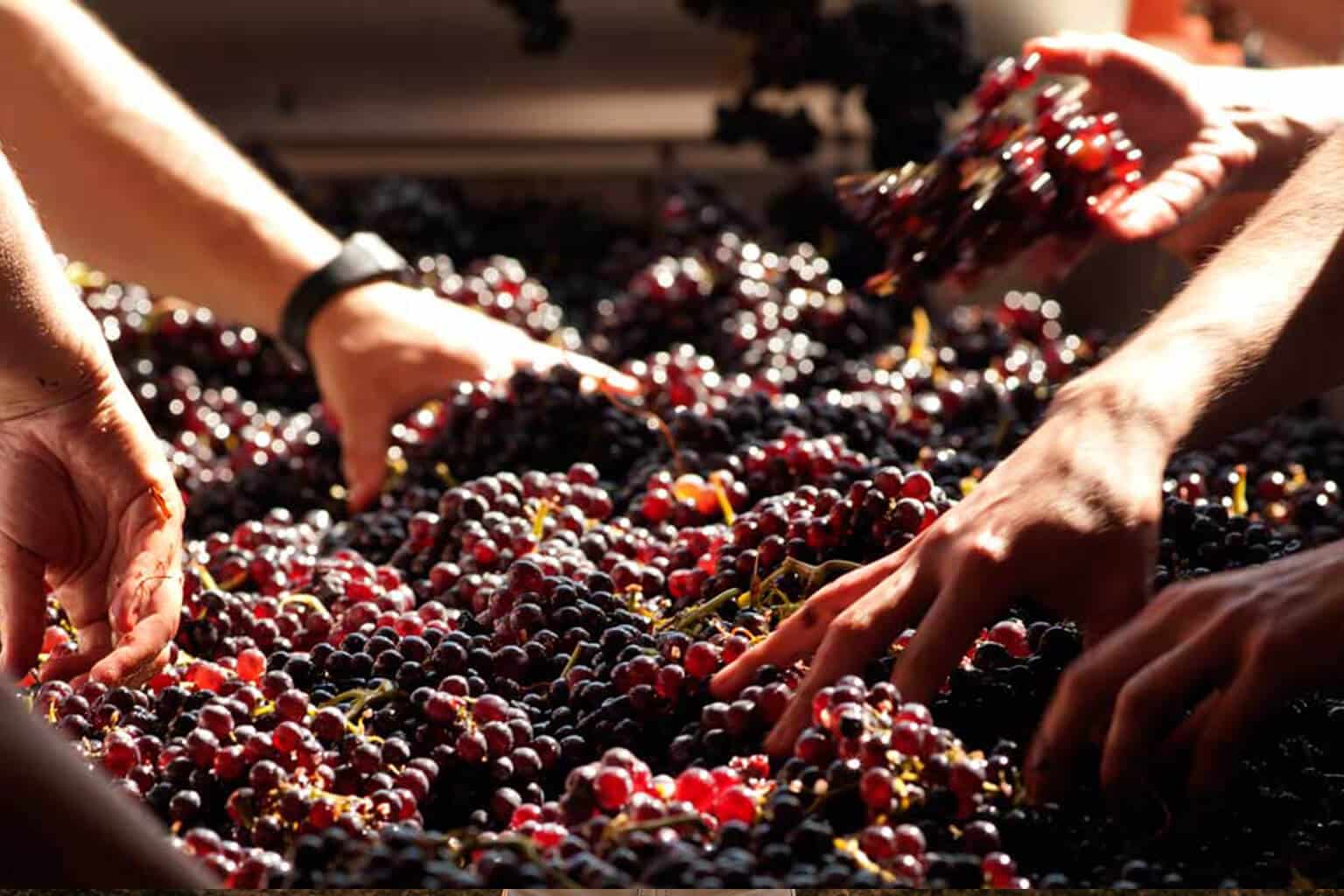
Making wine is a surprisingly complex process, and it all starts with one deceptively simple step: harvesting the grapes and getting them ready for fermentation.
At home, most of us instinctively rinse grapes before eating them, just as we would any other fruit. At a winery, though, things work a little differently.
Freshly harvested grape clusters are typically not washed before they are processed. Instead, they are sorted and then sent to a crusher or press.
At first, that may sound a little strange. Grapes grow outdoors, after all. They are exposed to dust, dirt, insects, and whatever else happens to be floating around a vineyard. So why don’t winemakers give the grapes a quick shower before turning them into wine?
There are actually some very good reasons. Let’s take a closer look.
Pruin: The Grape’s Natural Protective Coating
Take a close look at a dark-colored grape and you’ll often notice a soft, whitish or bluish coating on the skin. It can look like dust, but don’t reach for the soap just yet.
That coating is called pruin—a natural waxy layer produced by the grape itself.
Pruin serves several useful purposes. It helps the grape retain moisture, protects the skin from environmental stress, and provides a natural barrier against some unwanted microorganisms.
The surface of grapes is also home to various microorganisms, including naturally occurring yeasts. That’s why you’ll often hear the term “wild yeast” when people talk about traditional or natural winemaking.
There’s an important distinction here, though. The presence of wild yeast doesn’t mean that every winemaker relies on it.
Modern winemaking gives producers plenty of control over fermentation, and many wineries use carefully selected commercial yeast strains to manage how fermentation begins and how it develops.
So Why Wash the Grapes If They’re Going to Be Processed Anyway?
The simple answer is that washing grapes offers very little benefit to a winemaker while introducing an unnecessary variable into the process.
Once grapes are harvested, winemakers generally want to get them into production as quickly as possible. The goal is to preserve the fruit in as natural and consistent a condition as possible and avoid anything that could alter the composition of the juice.
Washing does remove some of the microorganisms living on the grape skins. For wines that will be fermented with selected commercial yeast, that isn’t necessarily a disaster—but there’s usually no compelling reason to do it in the first place.
And then there’s the water itself.
Winemaking already involves plenty of variables to manage: sugar levels, acidity, temperature, fermentation time, skin contact, oxygen exposure, and more. Adding another question—“How much water is left on the grapes?”—is not exactly something most winemakers are eager to deal with.
So rather than washing the fruit, wineries generally focus on getting clean, healthy grapes from the vineyard to the winery and processing them without unnecessary intervention.
What About Dust, Dirt, and Bugs?
This is where things get interesting.
The fact that grapes aren’t washed doesn’t mean winemakers simply dump everything from the vineyard into the crusher—leaves, stems, damaged berries, and the occasional uninvited insect included.
Quite the opposite.
Sorting is a major part of the process.
After harvesting, grape clusters may go through manual or mechanical sorting. Depending on the winery and the style of wine being made, leaves, pieces of stems, underripe or damaged berries, spoiled clusters, and other unwanted material are removed.
Quality-focused wineries also pay close attention to how and when grapes are harvested. Healthy fruit picked under the right conditions and handled gently creates far fewer problems later in the cellar.
So instead of the simple formula:
dirty grapes → wash them
winemaking follows something closer to:
healthy grapes → careful harvesting → thorough sorting → processing.
And honestly, that’s a much more practical approach than giving every grape its own little spa treatment.
That White Coating Isn’t Dirt
There’s another reason people sometimes assume grapes need to be washed: their appearance.
On dark-colored varieties especially, that hazy, powdery-looking coating can be quite noticeable. It may look like dust, but in most cases, it’s simply natural pruin.
This waxy layer helps the grape retain moisture and is part of its natural defense system. From a winemaker’s perspective, it’s generally a useful feature of the fruit—not something that needs to be scrubbed away.
Of course, grapes can sometimes be exposed to genuine contaminants or unwanted substances. Vineyards require careful management, and wineries have strict sanitation practices for equipment and production areas.
But dealing with those concerns generally isn’t a matter of washing every grape under running water. Instead, wineries rely on good vineyard practices, crop monitoring, proper harvesting, equipment sanitation, and careful sorting.
That’s why cleanliness in winemaking is about much more than whether someone washed the grapes.
So Why Should You Wash Grapes at Home?
This part is much easier.
If you buy grapes at the grocery store or farmers market and plan to eat them at home, give them a good rinse before eating them.
Your goal is completely different from that of a winemaker. You’re not trying to manage alcoholic fermentation or turn the fruit into wine. You’re simply preparing it to eat.
For a winemaker, pruin and the natural microbial population on grape skins can be relevant to the winemaking process. For someone eating fresh grapes, the priority is removing dirt and other potential surface contaminants.
So the fact that wineries generally don’t wash grapes isn’t a sign of poor hygiene, and it’s not some clever attempt to save a few gallons of water.
It’s simply part of the winemaking process.
The grapes are grown, harvested, and sorted with the goal of preserving their quality. After that, the winemaker lets fermentation do what fermentation does best.
And that’s one of the fun little contradictions of wine: something that seems like an obvious step at home—washing your grapes—can be completely unnecessary at a winery.
After all, if winemakers really wanted every grape to leave the vineyard perfectly spotless, they could probably open a car wash.
But instead, they make wine. And thankfully, that’s a much more interesting business.