


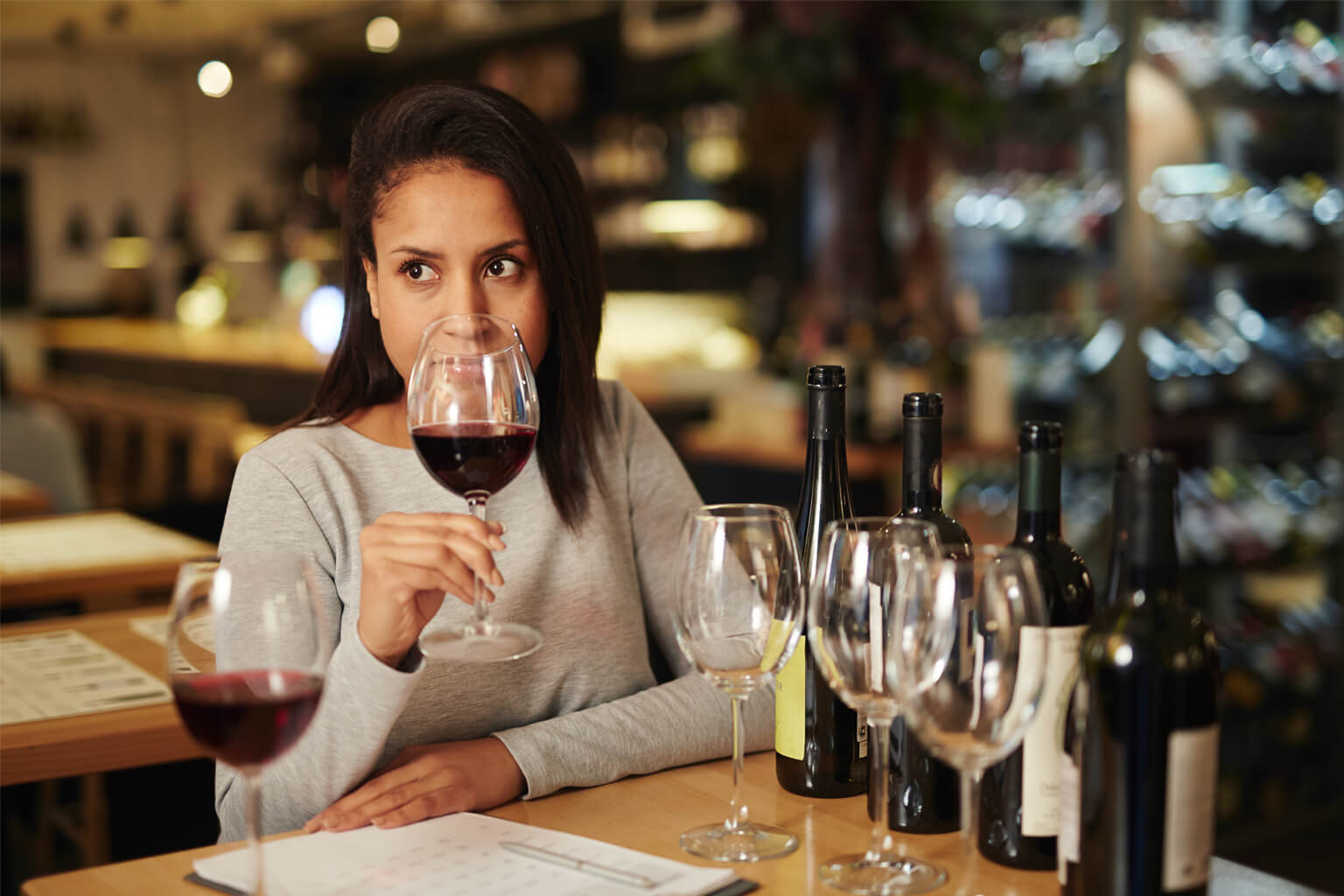
Let’s Find Out: Can AI Taste Wine Like a Human? Not long ago, the idea of a computer professionally evaluating wine sounded like science fiction. Today, advances in artificial intelligence are prompting the wine industry to take that possibility seriously. For many experts, the question is no longer whether AI will become part of wine evaluation, but when.
One of the strongest advocates of this view is Benjamin Lewin, a Master of Wine and molecular biologist. Lewin believes that modern AI has the potential to fundamentally change how wine quality is analyzed and assessed.
Why Human Wine Tasting Isn’t Perfect
Every wine tasting ultimately depends on one thing: human perception. Even the world’s most experienced sommeliers and wine critics can evaluate the exact same wine differently.
Numerous scientific studies have shown that identical wines served to the same experts under different conditions often receive significantly different scores. A surprising number of variables can influence the final judgment, including:
- Fatigue
- Mood
- Room temperature
- Expectations about the winery or wine region
- The bottle’s price
- The producer’s reputation
Even highly trained professionals aren’t immune to these psychological biases.
Artificial intelligence, on the other hand, has no emotions, expectations, or preconceived opinions. It doesn’t care whether a wine comes from a famous château in Bordeaux or an unknown producer halfway around the world. It evaluates data—not reputation.
How Does AI Taste Wine? Can Flavor Really Be Measured?
When we describe a wine as “balanced,” “complex,” or “richly aromatic,” we’re talking about characteristics that are, to a surprising extent, measurable.
Modern laboratories can accurately analyze nearly every major component of a wine, including:
- Color intensity and hue
- Acidity (pH and total acidity)
- Sugar content
- Alcohol level
- Volatile aroma compounds
- Phenols, tannins, and organic acids
To gather this information, scientists use sophisticated tools such as spectrophotometers, gas chromatographs, and mass spectrometers.
While the human nose is remarkably sensitive, laboratory instruments can detect hundreds of chemical compounds with a level of precision no human taster can match.
Where Artificial Intelligence Has the Advantage
AI doesn’t “taste” wine the way a sommelier does—not even close. Rather than relying on aroma, flavor, and years of experience, it analyzes massive amounts of chemical, physical, and mathematical data from an enormous database of wines. The real strength of AI isn’t simply measuring chemical data—it’s recognizing patterns across enormous datasets.
Imagine an AI system trained on:
- Millions of tasting notes
- Laboratory analyses of wines
- Scores from leading wine critics
- Grape variety characteristics
- Climate and vineyard data from wine regions worldwide
By analyzing this information, machine learning models can identify relationships that would be almost impossible for a human to detect.
For example, AI can discover:
- Which aroma compounds most consistently correlate with high wine scores
- Why certain wine styles appeal to specific groups of critics
- Which chemical characteristics are commonly found in wines rated above 95 points
In other words, AI has the potential to connect a wine’s chemistry with how people perceive its flavor—revealing hidden patterns that traditional tasting alone might never uncover.
The Fully Automated Wine Tasting Lab
One of the most exciting ideas emerging from this research is the concept of a completely automated wine evaluation laboratory.
In such a system, every bottle would go through a structured process:
- Physical analysis
- Complete chemical profiling
- Aroma compound analysis
- AI-powered interpretation of the data
- Generation of a tasting note and predicted quality score
The AI could even be trained on decades of published reviews from famous wine critics, allowing it to write tasting notes that closely resemble a particular critic’s style while remaining completely consistent and free from human bias.
Unlike people, an AI system doesn’t become tired, influenced by marketing, or affected by personal preferences or commercial interests.
This Is No Longer Science Fiction
Much of this technology already exists.
Millions of wine drinkers regularly use smartphone apps that identify wines from a label photo or barcode and generate personalized recommendations. The best-known example is Vivino, which combines user ratings with machine learning to help consumers discover wines they’ll likely enjoy.
But today’s research goes much further than recommendation apps.
Recent scientific studies suggest that machine learning models can predict many of a wine’s sensory characteristics using only its chemical composition. In numerous cases, those predictions closely match the evaluations of professional wine tasters.
Meanwhile, several European research initiatives are developing multisensory systems that combine laboratory analysis, AI, and extensive tasting databases to create increasingly accurate models of wine quality.
Does This Mean the End of Sommeliers?
Probably not.
Most wine professionals believe that artificial intelligence will enhance the sommelier’s work rather than replace it.
Choosing the right bottle involves far more than chemistry.
A skilled sommelier also considers:
- The occasion
- Guests’ personal preferences
- The menu
- The atmosphere
- The mood at the table
- The customer’s budget
The very same wine might be the perfect recommendation for a romantic anniversary dinner but completely wrong for a business lunch or a casual backyard barbecue.
These emotional and social nuances remain uniquely human—and they’re difficult, if not impossible, to reduce to data.
The Future Belongs to Humans and AI Working Together
The future of wine isn’t likely to be a battle between people and machines. Instead, it’s shaping up to be a partnership.
Artificial intelligence can rapidly analyze chemical composition, identify subtle characteristics, predict quality, and help winemakers improve consistency and production techniques.
Human experts, meanwhile, bring something technology still cannot replicate: empathy, storytelling, intuition, and the ability to transform a bottle of wine into a memorable experience.
So perhaps the real question isn’t whether AI will someday evaluate wine better than people.
It’s whether the best wine experiences of the future will come from combining the precision of artificial intelligence with the insight, passion, and humanity of a great sommelier.
That combination may well become the next standard in the world of wine.