


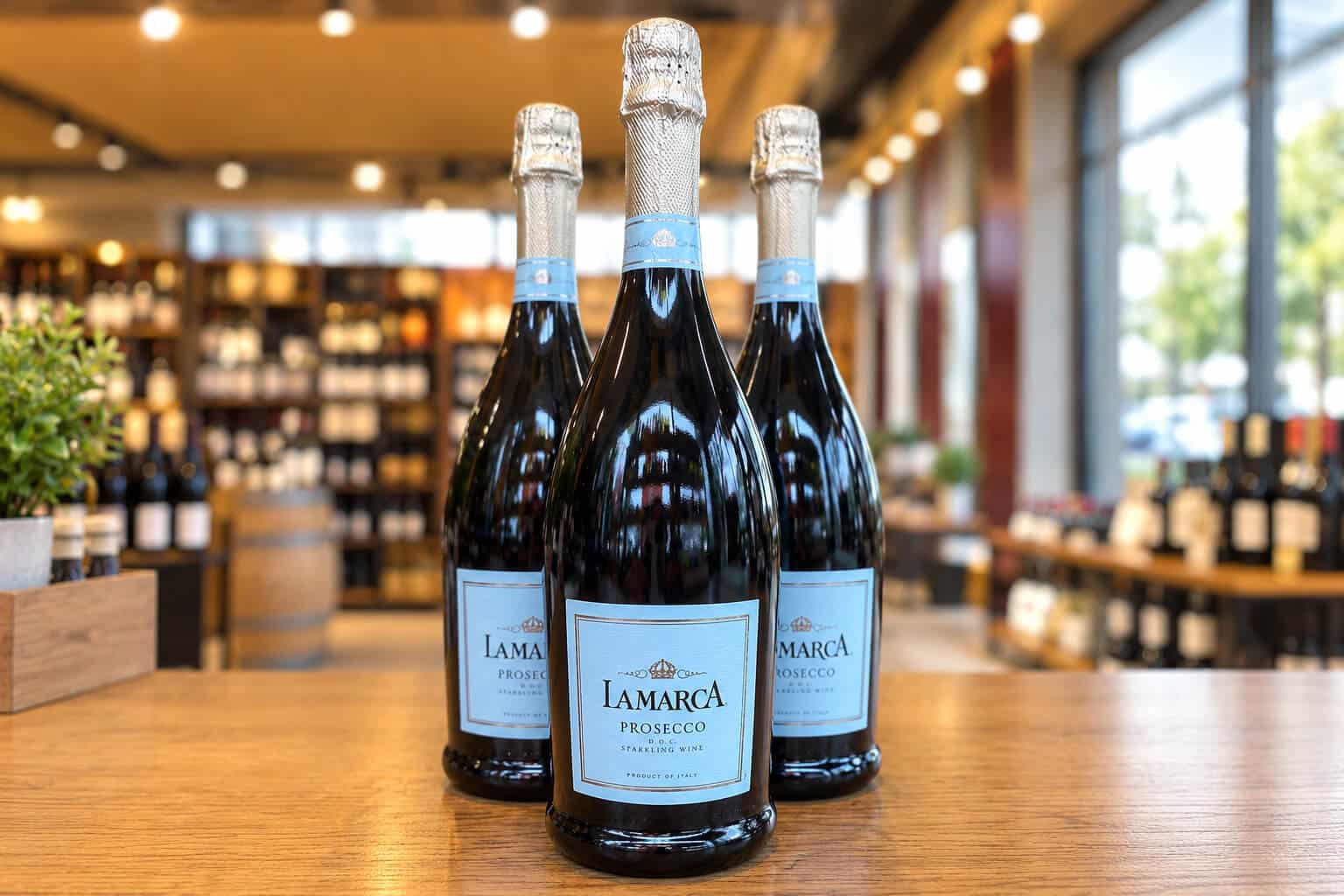
August 13 gives sparkling wine lovers a perfectly good reason to open a bottle of Prosecco. Prosecco Day is a relatively new celebration—it was launched in 2016 by Italian producer Riondo. The holiday may still be young, but the wine itself has already built quite a reputation.
In 2025 alone, about 667 million bottles of Prosecco DOC were produced, with roughly 82% exported around the world. Those numbers tell you something: Prosecco is no longer just one of Italy’s many sparkling wines. It has become an international wine language that hardly needs translation.
But there’s a small—and important—wine detail.
Not every sparkling wine with cheerful bubbles is Prosecco. In fact, even if a bottle contains Glera grapes, that still doesn’t automatically give the producer the right to put “Prosecco” on the label.
What Does “Prosecco” Actually Mean?
Let’s start with the most important point: Prosecco is not simply the name of a grape variety, nor is it the name of a particular winemaking method. It is a protected Italian geographical designation.
Prosecco DOC can only be produced within a defined area covering nine provinces in the Italian regions of Veneto and Friuli-Venezia Giulia.
The wine must be based primarily on Glera, which has to make up at least 85% of the blend. The remaining portion may come from other permitted varieties, including Verdiso, Bianchetta Trevigiana, Perera, Glera Lunga, Chardonnay, Pinot Blanc, Pinot Grigio, and Pinot Noir.
Rosé Prosecco follows its own rules: it must contain 85–90% Glera and 10–15% Pinot Noir.
And this is where the story gets interesting.
Before the 2009 reform, Prosecco was used both as the name of the wine and as the name of the grape. The grape was then officially renamed Glera, while “Prosecco” was reserved for wines connected to the protected geographical area.
It turned out to be a very effective way to protect both the region and the brand.
Glera can be grown pretty much anywhere in the world. But the resulting wine cannot legally be called Prosecco.
In other words, the grape may be the same. The place where it comes from is a completely different story.
Why Is Prosecco So Easy to Love?
Glera has almost everything you could want in a modern sparkling wine.
It naturally retains good acidity and produces delicate fruit and floral aromas. In a good bottle of Prosecco, you’ll often find notes of green and yellow apple, pear, white peach, citrus, and white flowers such as acacia.
This is not the kind of wine that requires you to sit over the glass for twenty minutes with a serious expression, trying to figure out exactly where that “subtle mineral note with a hint of wet stone” is hiding.
Prosecco is much easier than that.
It’s fresh, light, fruity, and approachable. You can open it before dinner, pour it for friends at a party, or enjoy a glass on Friday night simply because—finally—it’s Friday.
That versatility is a big part of what turned Prosecco into a global phenomenon.
How Is Prosecco Made?
Most Prosecco is produced using the Martinotti–Charmat method. Instead of carrying out the secondary fermentation in individual bottles, winemakers conduct it in large, pressurized tanks.
For Prosecco, this makes perfect sense. The method helps preserve the wine’s bright primary fruit character and floral aromas.
That’s why comparing Prosecco and Champagne simply because “they both have bubbles” is about as logical as comparing espresso and cappuccino just because both contain coffee.
The traditional method used for Champagne and many other complex sparkling wines involves secondary fermentation in the bottle and extended aging on the lees. This can create richer notes of bread, brioche, cream, nuts, and other more complex flavors.
Prosecco usually plays a different game: fresh fruit, apple, pear, flowers, and a sense of lightness.
Brut or Extra Dry? The Little Italian Trap
Now we get to one of the most confusing things for anyone choosing a bottle based on the label.
If you see Extra Dry, common sense suggests that the wine should be very dry.
Not quite.
Extra Dry is actually sweeter than Brut.
For classic Extra Dry Prosecco in the Conegliano-Valdobbiadene area, residual sugar is generally around 12–17 grams per liter.
Sounds pretty sweet, right? Not necessarily.
Glera’s naturally high acidity does a great job of balancing the residual sugar, keeping the wine fresh and lively. That touch of sweetness can also make the fruit flavors feel more pronounced.
That’s why someone can honestly say, “I only drink dry wine,” and then happily order a glass of Extra Dry.
The wine world has a talent for these little surprises.
If you prefer a drier style, look for Brut.
Prosecco Can Surprise You: What Is Col Fondo?
For most people, the word Prosecco brings up a very specific image: pale sparkling wine, delicate bubbles, a chilled glass, and a warm summer evening.
But there is a much more unusual version.
Historically, winemakers in the region also made wines where the second fermentation took place directly in the bottle, with the wine remaining in contact with the yeast sediment. Today, this traditional style can be found under names such as Col Fondo or Sui Lieviti.
And it has a completely different personality.
The wine may be slightly cloudy and less polished-looking, with more pronounced bread, yeast, and savory notes. The bubbles can feel different, too, while the wine itself tends to have noticeably more texture.
It may not look like the classic Prosecco you know — but it’s absolutely worth trying.
Looking for an Alternative to Prosecco? Try Georgian Sparkling Wine
Let’s make one thing clear right away: there is no such thing as Georgian Prosecco.
And that’s perfectly fine.
Georgia produces sparkling and lightly sparkling wines that can appeal to people who love Prosecco for its freshness, fruitiness, and easy-drinking character.
It’s especially interesting to explore Georgian wines made from Rkatsiteli. This grape performs beautifully in sparkling styles, producing fresh, aromatic wines with plenty of natural acidity.
Amber Sec — Silk Road Wines
This dry, semi-sparkling wine is made from Rkatsiteli and offers moderate bubbles with a light, festive personality.
In the glass, it shows a pale straw color with golden highlights. The aromas lean toward fruit and flowers, while the palate brings out particularly pleasant notes of peach and dried fruit.
The bubbles are gentle rather than aggressive, making the wine easy to enjoy on its own or alongside light appetizers.
Who is it for? Anyone who loves Prosecco for its affordability, fruitiness, and easygoing style but wants to try something a little different.
Extra Brut — Silk Road Wines
If Extra Dry feels a little too soft for your taste, the logical next step is a drier style.
Silk Road Wines Extra Brut is aimed at drinkers who prefer a sharper, more structured sparkling wine. There is less sweetness on the palate and more emphasis on freshness, acidity, and structure.
The fruit character is still there, but the wine feels more focused and serious.
It’s also a great food wine. It doesn’t have to be the only drink of the evening — it works beautifully at the table with seafood, light appetizers, cheese, and poultry dishes.
Who is it for? Fans of Brut and other dry sparkling wines who want to explore a new interpretation of a familiar style.
Rosé Sec — Silk Road Wines
And now we enter the territory of people who believe rosé isn’t a seasonal trend but simply a perfectly reasonable life choice.
Rosé Sec is a dry, lightly sparkling rosé from Kakheti made with 70% Rkatsiteli and 30% Saperavi.
The aromas bring red and green berry notes, while the secondary fermentation gives the wine a gentle sparkle and refreshing character.
Saperavi adds a little more fruit depth than you might expect from such a light sparkling rosé.
Who is it for? Anyone who loves Prosecco primarily for its freshness and aromatic character but wants to add a little more berry flavor and color to the glass.
The Best Part of Prosecco Day
Prosecco has one wonderful quality: it never tries too hard to be serious.
It’s a wine for celebrations, catching up with friends, brunch, picnics, and that classic moment when someone says, “Just one glass,” and somehow, an hour later, there’s a second bottle on the table.
But Prosecco Day is also a great excuse to explore beyond the familiar Italian classic.
Try a wine made from Glera. Look for an Extra Brut. Find a bottle of Col Fondo. Or go a little farther afield and explore sparkling wines from Georgia.
Because the best way to understand wine isn’t to memorize an endless list of rules. It’s to taste different styles and gradually figure out what you actually enjoy.
And if, after all that exploring, you still reach for a chilled bottle of Prosecco — no judgment.
Sometimes the best wine choice is simply the one that makes the evening a little more enjoyable.
And if you’re ready to venture beyond Italy, Georgian sparkling wines made from Rkatsiteli — including Amber Sec, Extra Brut, and Rosé Sec from Silk Road Wines — are worth a look.
The golden rule is simple: don’t search for the one “correct” sparkling wine.
Find the one you want to pour another glass of.