


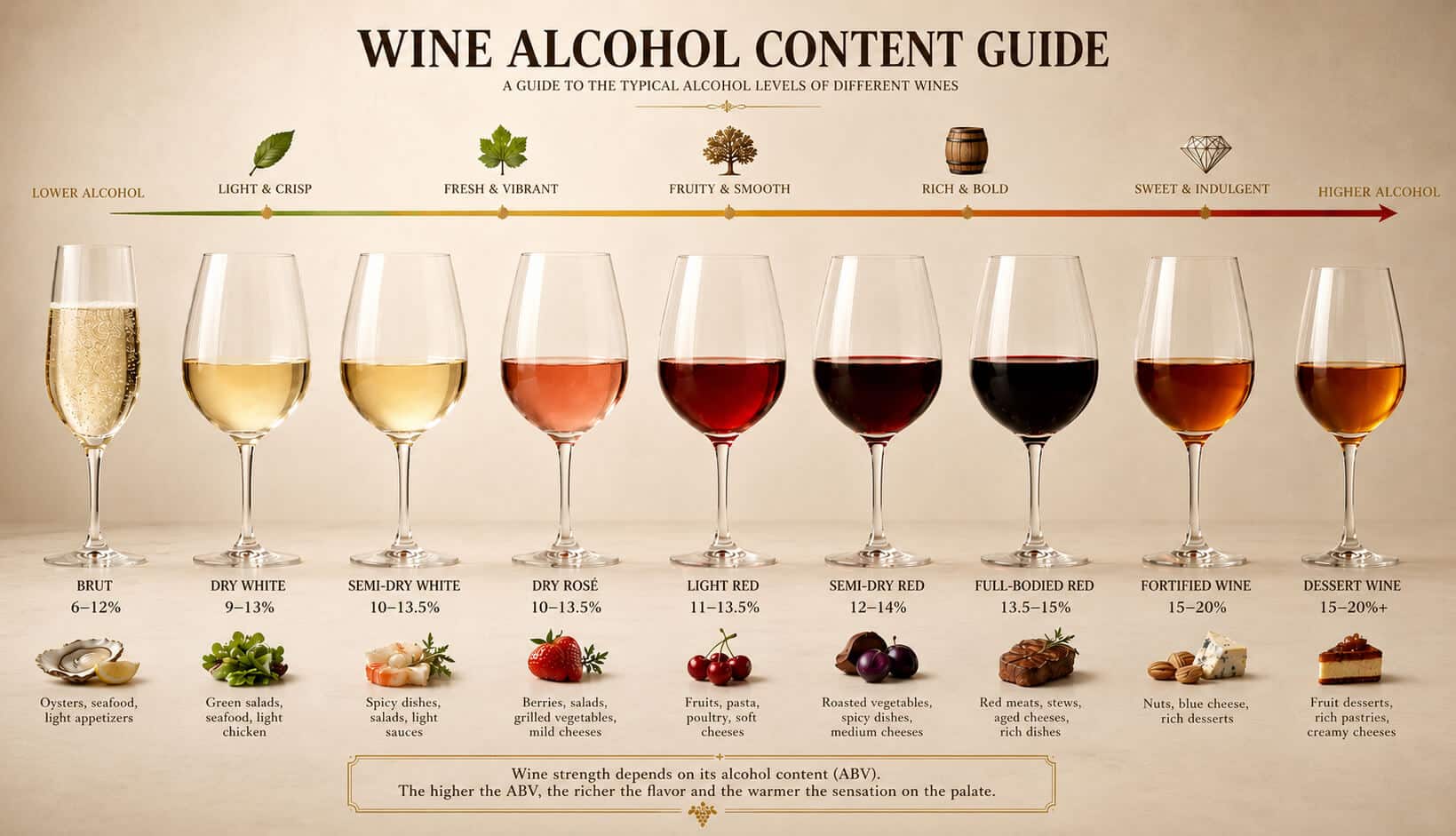
Alcohol content is one of the most important characteristics of any wine. It doesn’t happen by chance—it’s shaped by the grape variety, the climate where the grapes are grown, how ripe they are at harvest, their natural sugar levels, and the winemaking process itself.
Most still wines contain between 9% and 15% alcohol by volume (ABV), while fortified wines can range from 17% to 22% ABV.
Why Different Wines Have Different Alcohol Content
Alcohol is created during fermentation, when yeast converts the natural sugars in grapes into alcohol. The more sugar the grapes contain at harvest, the more alcohol the yeast can potentially produce.
Red Wines
Red wines typically have a higher alcohol content than white wines. Most fall between 12% and 15% ABV, although full-bodied reds from warmer climates often exceed this range.
White Wines
White wines generally range from 9% to 14% ABV. They’re often made in a lighter, fresher style, so winemakers aim to maintain a good balance between acidity and alcohol.
Rosé Wines
Rosé sits comfortably between red and white wine. Most rosés contain 10% to 13% ABV, offering a refreshing character with a bit more body and flavor than many white wines.
Sparkling Wines
Most sparkling wines contain 10% to 12% ABV, although the exact alcohol level depends on the production method and the wine region.
Climate Plays a Major Role
Climate has a huge impact on wine alcohol content. In warmer regions, grapes ripen more quickly and develop higher sugar levels, which usually results in wines with higher alcohol content. In cooler climates, grapes accumulate less sugar, so wines often have lower alcohol levels but brighter, more pronounced acidity.
The winemaker’s style also matters. If fermentation is stopped early, some natural sugar remains in the wine, changing its balance and sweetness. For fortified wines such as Port or Sherry, grape spirit is added during production, significantly increasing the alcohol content.
Is Sweetness Related to Alcohol Content?
Many people assume that sweet wines are stronger than dry wines, but that’s actually a common misconception.
Dry wines are made by allowing nearly all of the grape’s natural sugars to ferment into alcohol. As a result, they can have the same—or even higher—alcohol content than sweet wines.
Off-dry wines typically contain 11% to 13.5% ABV, although this varies depending on the grape variety, growing region, and winemaking techniques.
Semi-sweet and sweet wines often have alcohol levels similar to dry wines. They simply taste softer and richer because they contain more residual sugar.
In other words, sweetness and alcohol are two completely different characteristics. Residual sugar determines how sweet a wine tastes, while ABV measures how much alcohol it actually contains.
How Alcohol Affects the Taste of Wine
Higher alcohol content generally gives wine a fuller body, richer texture, and a warming sensation. If the alcohol level is too high, however, it can feel hot or overpowering and may overshadow the wine’s fruit flavors.
Lower-alcohol wines usually taste lighter, crisper, and more refreshing.
That’s why it’s best not to choose a wine based solely on the number printed on the label. For example, a crisp Sauvignon Blanc and a bold Cabernet Sauvignon may have nearly identical alcohol levels while delivering completely different drinking experiences.
The 10 Most Popular Still Wines in the United States
The list below features the most popular still wine varieties in the U.S. market. These are wine styles and grape varieties—not specific brands.
|
Wine |
Type | Sweetness | Average ABV | Primary Grapes |
Best Food Pairings |
|
Cabernet Sauvignon |
Red | Dry | 13.5–15.5% | Cabernet Sauvignon, sometimes Merlot,
Cabernet Franc, Petit Verdot |
Ribeye steak, lamb, aged cheddar |
|
Pinot Noir |
Red | Dry | 12.5–14.5% | Pinot Noir | Duck breast, grilled salmon, mushroom risotto |
| Merlot | Red | Dry | 13–14.5% | Merlot, sometimes Cabernet Sauvignon
and Cabernet Franc |
Roast turkey, spaghetti Bolognese, pork chops |
|
Chardonnay |
White | Dry | 13–14.5% | Chardonnay | Lobster, creamy chicken dishes, Fettuccine Alfredo |
|
Sauvignon Blanc |
White | Dry | 12–14% | Sauvignon Blanc | Goat cheese, oysters, seafood |
| Pinot Grigio | White | Dry | 11.5–13.5% | Pinot Grigio (Pinot Gris) |
Shrimp, white fish, fresh salads |
| Riesling | White | Dry or Off-Dry | 8–12% | Riesling |
Thai cuisine, sweet-and-sour pork, spicy dishes |
|
Moscato |
White | Sweet | 5–9% | Muscat varieties |
Cheesecake, fruit desserts, fresh berries |
|
Zinfandel |
Red | Dry | 14–16% | Zinfandel |
Barbecue, smoked ribs, pepperoni pizza |
| Rosé | Rosé | Dry | 11.5–13.5% | Grenache, Syrah, Mourvèdre, Pinot Noir,
Sangiovese, and others |
Grilled tuna, Mediterranean salads, soft cheeses |
Interesting Facts About America’s Favorite Wines
- Cabernet Sauvignon remains the best-selling red wine style in the United States and consistently ranks among consumers’ top choices.
- Chardonnay has been America’s favorite white wine for many years.
- Pinot Noir continues to gain popularity thanks to its elegant flavor profile and versatility.
- Sauvignon Blanc is especially popular during the warmer months because of its crisp acidity and refreshing character.
- Pinot Grigio is one of the go-to wines for everyday drinking.
- Riesling is widely considered one of the best wines to pair with Asian cuisine.
- Moscato is a favorite among new wine drinkers because of its lower alcohol content and naturally sweet flavor.
- Zinfandel has become one of the signature wines of American winemaking, particularly in California.
- Rosé remains one of the fastest-growing categories of still wine in the U.S. market.
What Does the Alcohol Percentage on a Wine Label Mean?
Wine labels display Alcohol by Volume (ABV) rather than the informal “proof” or “degrees” people sometimes refer to.
For example, a bottle labeled 13% ABV contains approximately 13 milliliters of pure alcohol in every 100 milliliters of wine.
Keep in mind that alcohol levels can vary slightly from one vintage to another, even for the same wine. Weather conditions, sunshine, rainfall, and grape ripeness change every year, affecting the grapes’ natural sugar levels and, ultimately, the finished wine’s alcohol content.
As a general guide:
- White wines: 9–14% ABV
- Red wines: 12–15% ABV
- Rosé wines: 10–13% ABV
- Sparkling wines: 10–12% ABV
- Fortified wines: 17% ABV and higher
Of course, alcohol is only one piece of the puzzle. Acidity, residual sugar, tannins, aromas, fruit character, and overall balance all contribute to how a wine tastes.
That’s why experienced wine lovers recommend choosing a wine based not only on its ABV, but also on its style, the food you’ll be pairing it with, and the occasion you’re enjoying it for.