


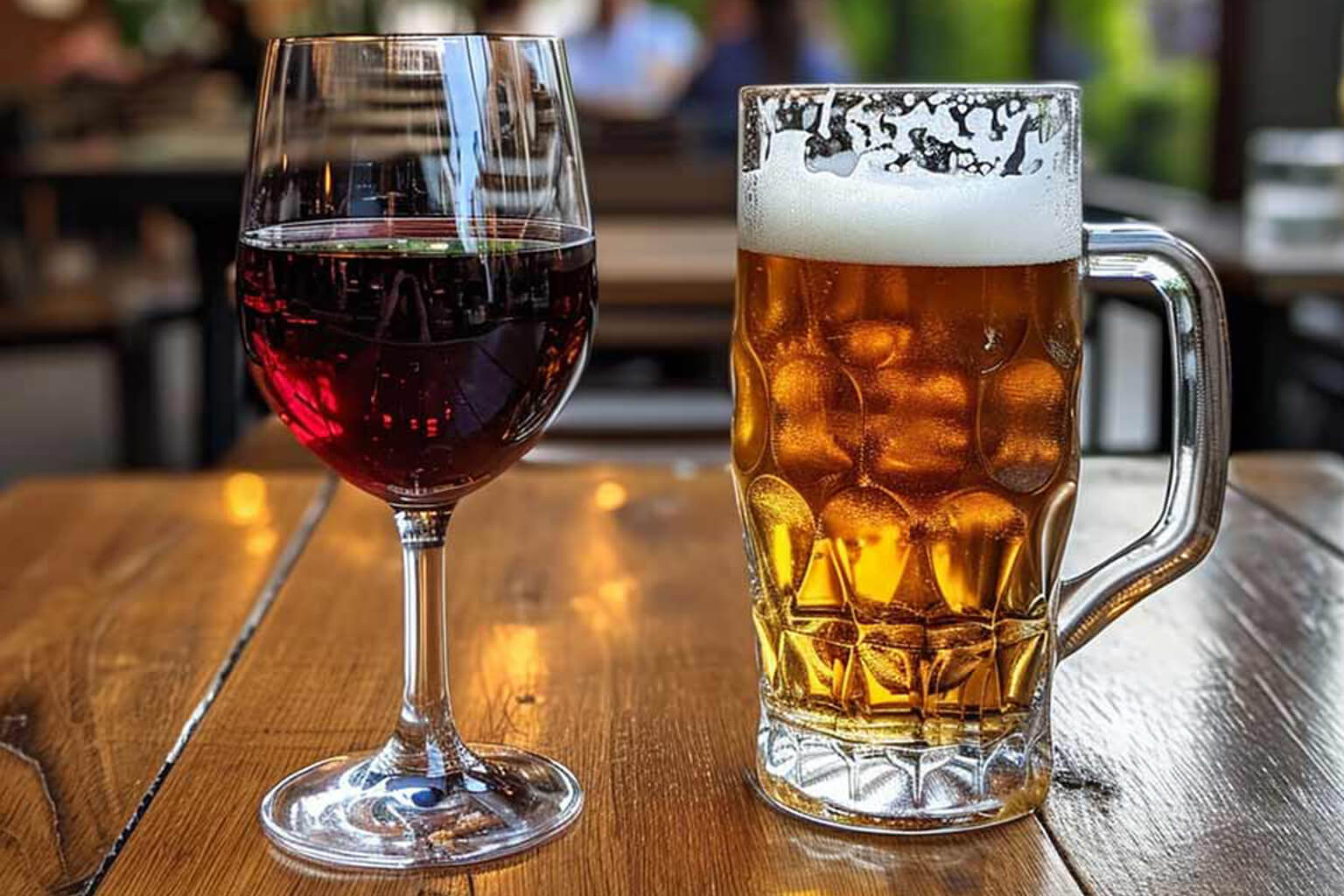
Wine or beer—which is better? The debate has been going on for centuries, and there’s no single right answer. Both beverages have ancient origins, millions of devoted fans, and deep cultural significance around the world. However, they differ in many important ways, from ingredients and production methods to flavor profiles, calories, and how they fit into different lifestyles.
Let’s take a closer look.
The Origins of Wine and Beer
Humans have been enjoying both wine and beer for thousands of years.
Archaeologists believe the earliest evidence of winemaking dates back roughly 8,000 years to the Caucasus region, where people first cultivated grapes and produced primitive wines.
Beer has an equally impressive history. The earliest known evidence of brewing dates back approximately 5,000–6,000 years in ancient Mesopotamia and Egypt.
An interesting historical fact: historians estimate that more than 20 different styles of beer already existed around 4,000 years ago, and beer was considered a staple part of the daily diet in ancient Egypt.
Over time, a cultural distinction emerged that still exists today. Wine became associated with celebrations, tradition, fine dining, and ceremony, while beer became the beverage of everyday relaxation, social gatherings, and casual enjoyment.
Today, both are global symbols of food and beverage culture and represent major export industries for many countries.
How Wine and Beer Are Made
Although both beverages are produced through fermentation, their ingredients and production processes are very different.
The primary distinction is simple:
- Wine is made from grapes.
- Beer is made primarily from grains, most commonly barley.
| Wine Production | Beer Production |
| Harvesting grapes | Malting barley |
| Crushing and pressing | Mashing |
| Fermentation | Boiling with hops |
| Aging | Fermentation |
| Bottling | Filtration and bottling |
Because of these differences, wine typically showcases fruit-driven aromas and flavors, while beer develops malt, grain, and hop characteristics.
Modern producers use sophisticated technology to create everything from affordable everyday beverages to ultra-premium collectibles worth thousands of dollars.
Types of Wine and Beer
Today’s variety can be overwhelming—even for experienced enthusiasts.
Common Types of Wine
- Red Wine
- White Wine
- Rosé Wine
- Sparkling Wine
- Dry Wine
- Semi-Dry Wine
- Semi-Sweet Wine
- Sweet Wine
- Dessert Wine
- Fortified Wine
Among consumers, red, white, semi-sweet, and sweet wines remain especially popular.
Common Types of Beer
- Lager
- Ale
- Wheat Beer
- Porter
- Stout
- IPA (India Pale Ale)
- Pilsner
- Non-Alcoholic Beer
Each category contains numerous styles and regional variations.
When it comes to food pairings, wine is often viewed as part of a complete dining experience, while beer is generally considered a more casual, everyday beverage.
Most Popular Wine and Beer Brands in the United States
The United States is one of the world’s largest alcohol markets.
Popular Wine Brands
- Barefoot
- Sutter Home
- Robert Mondavi
- Kendall-Jackson
- Josh Cellars
Popular Beer Brands
- Budweiser
- Bud Light
- Coors Light
- Miller Lite
- Corona Extra
How Much Wine and Beer Does the World Drink?
Global consumption figures highlight just how popular both beverages are.
Each year, people consume approximately:
- More than 180 billion liters of beer
- Around 23–24 billion liters of wine
In terms of volume, beer consumption is roughly eight times higher than wine consumption.
However, the global wine industry is valued at more than $300 billion annually, largely because the average bottle of wine typically sells for more than the average bottle of beer.
The United States continues to rank among the world’s largest wine-consuming nations and remains one of the most important markets for international wine producers.
Why Many People Prefer Wine Over Beer
Both beverages have passionate supporters, but several factors contribute to wine’s enduring appeal.
Advantages of Wine
- More complex aromatic profile
- Greater diversity of flavors
- Exceptional food-pairing versatility
- Contains naturally occurring polyphenols and antioxidants
- Often associated with celebrations and special occasions
- Typically contains fewer carbohydrates per serving
Another common consideration is calorie intake.
Beer itself contains calories, but many beer drinkers also consume high-calorie snacks such as chips, pretzels, sausages, and fried foods.
A typical 16.9 oz (500 ml) bottle of beer contains approximately 200–250 calories, while a standard 5 oz (150 ml) glass of dry wine usually contains around 120–130 calories.
Perhaps the most overlooked difference isn’t chemical—it’s cultural.
Wine often encourages people to slow down, appreciate aromas and flavors, and focus on conversation and the dining experience. Beer culture tends to emphasize casual, social, and high-volume consumption.
That cultural distinction may influence how people perceive these beverages just as much as their ingredients do.
How to Choose a Good Wine for Any Occasion
With thousands of wines available today, choosing the right bottle can seem intimidating.
A few simple guidelines can help:
- White wine pairs well with salads and lighter dishes.
- Red wine complements steaks and hearty meats.
- Sweet wine works beautifully with desserts.
- Semi-sweet wine is often a crowd-pleaser for casual gatherings.
- Premium wines are excellent choices for special occasions.
If you’re shopping for a gift, consider selecting wines from respected producers with strong international reputations.
Reading reviews and learning about the wine’s region of origin can also be helpful.
Many consumers now prefer buying wine online because it allows them to compare prices, read detailed descriptions, and enjoy convenient home delivery.
One final tip: a famous wine region doesn’t automatically guarantee the perfect bottle for your taste. Sometimes a lesser-known producer offers exceptional quality and unique character at a much more attractive price.
Final Thoughts
The debate over wine versus beer will probably never be settled—and that’s perfectly fine.
Both beverages have rich histories, devoted fans, and important places in global culture.
Beer remains approachable, affordable, and ideal for casual enjoyment, whether at a backyard barbecue, sporting event, or gathering with friends.
Wine, on the other hand, has long been associated with celebrations, fine dining, family meals, and life’s memorable moments. It offers tremendous diversity, showcases the character of grapes and terroir, and often creates a more elevated experience.
So which is better?
Ultimately, it depends on personal preference. But if you’re looking for complexity, versatility, food pairing potential, and a sense of occasion, many people would argue that wine has the edge. Meanwhile, beer continues to be the easygoing companion of everyday social life—and there’s certainly nothing wrong with that.